New P1 Rules Widen 12 School Catchments. What Now for School-Zone Homes?
At 12 schools, living as close as possible will no longer carry the same Phase 2C advantage. That changes what a school-zone premium pays for, not what makes a home worth living in.
The short read
From the 2027 Primary 1 registration exercise, 12 schools in Bukit Timah, Newton and Marine Parade will split their 60 Phase 2C places equally: 30 for children living within 2km and 30 for those living farther away, with no distance priority inside either group. The schools were chosen for their housing mix, not their popularity: public housing makes up between 5 and 37 per cent of homes within 2km of them.
Agents told The Straits Times it is too early to tell whether buying behaviour will change, so do not assume prices have moved. What has changed is that, at these 12 schools, paying more to live closer buys less Phase 2C certainty than it did. Judge the home on space, finances, commute and longer-term plans first, and treat school proximity as one input, not the reason to buy.
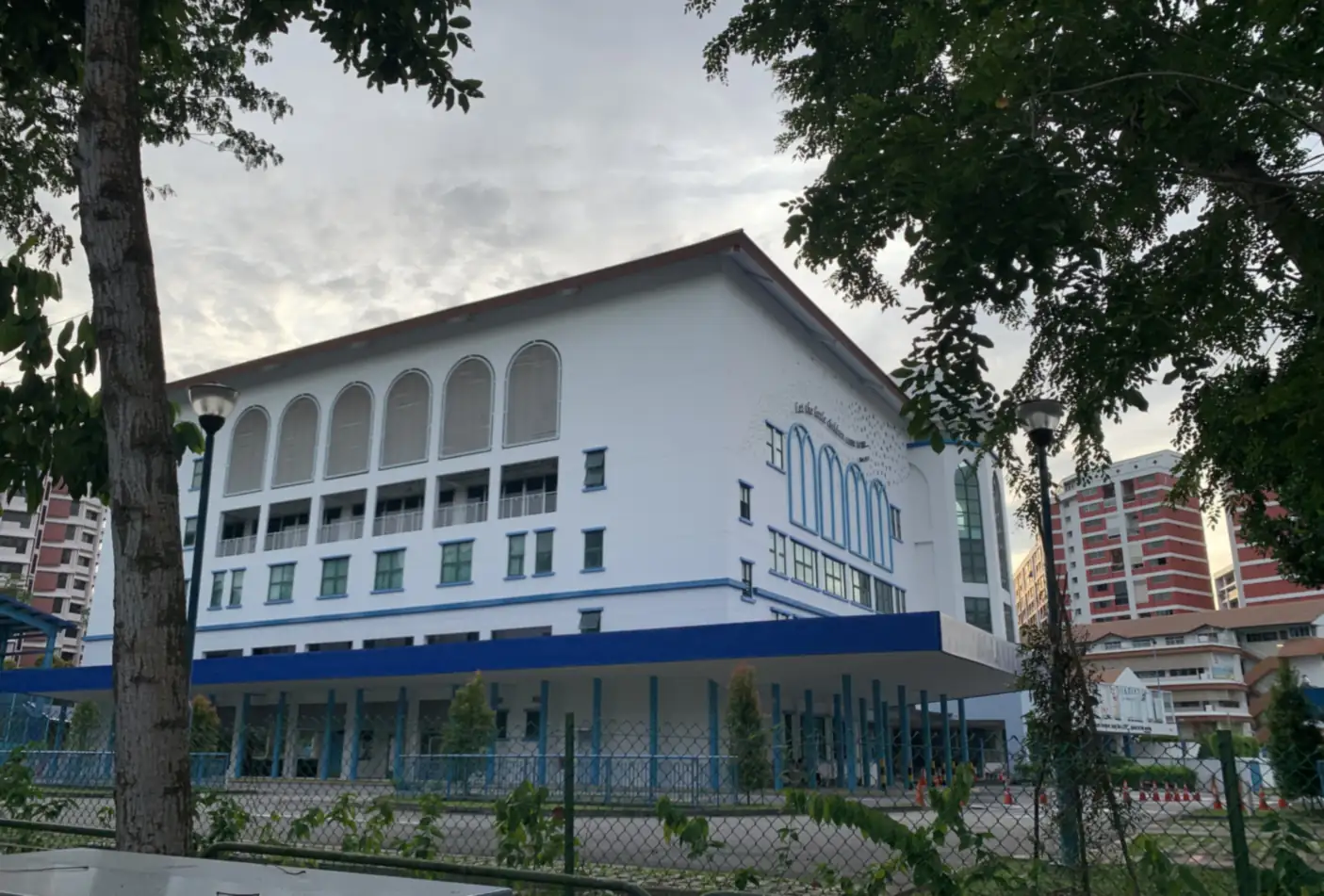
For some families, the pursuit of a preferred primary school has shaped where they live. Some property advertisements highlight homes within 1km of sought-after schools. From the 2027 Primary 1 registration exercise, the logic behind that 1km circle changes at 12 schools.
As The Straits Times reported, 12 primary schools in Bukit Timah, Newton and Marine Parade will adopt a new two-track system for Phase 2C, the phase for children without prior ties to the school. The 60 places reserved for Phase 2C at each of these schools will be split equally: 30 for children living within 2km, and 30 for those living farther away. Distance priority will not apply within either group.
An ST analysis of the neighbourhoods around those schools shows how different they are. Across the 12, public housing makes up between 5 per cent and 37 per cent of homes within a 2km radius. Nationally, about four in five residents live in public housing. Around Keming Primary School in Bukit Batok, 70 per cent of homes are public housing. Around Raffles Girls’ Primary School, just 5 per cent of homes within 2km are, the lowest proportion among primary schools in Singapore.
A companion ST piece spoke to property agents who advise families planning home moves around Primary 1. Reactions have been mixed, they said, and it is too early to tell whether purchasing behaviour will change.
That is the honest starting point. Nothing in these reports says prices near these schools have moved. What has changed is the reasoning some families used to justify paying more to live close, and if you own near one of these schools, or are saving to buy near one, it deserves a fresh look.
What exactly changes, and at which schools?
Two changes, one broad and one narrow.
The broad one: the minimum number of Phase 2C places will go up from 40 to 60 at most primary schools, in a move to widen access to schools and improve social mixing.
The narrow one applies at the 12 schools where public housing makes up less than 40 per cent of homes within 2km. There, the 2C places are split into two tracks, with half initially reserved for children living within 2km and half for those living farther away. More places could also be available in Phase 2C if there are vacancies after earlier phases.
One detail matters more than it first appears. The Ministry of Education selected the 12 based on the housing mix around them, rather than how popular or oversubscribed they are. So this is not a ranking of the hardest schools to get into, though ST noted many of the 12 are highly sought after. It is a list defined by the neighbourhood, which is why homeowners there should pay attention.
The effect, as ST put it, is that at these 12 schools, moving as close as possible will no longer hold the same advantage in Phase 2C as before.
Who actually lives around these schools?
Fewer households than you might expect, and a very different mix from the rest of Singapore.
ST found there are generally fewer housing units around the 12 schools than around other primary schools. Some are surrounded by lower-density landed housing; for others, parks or the sea take up parts of the 2km catchment.
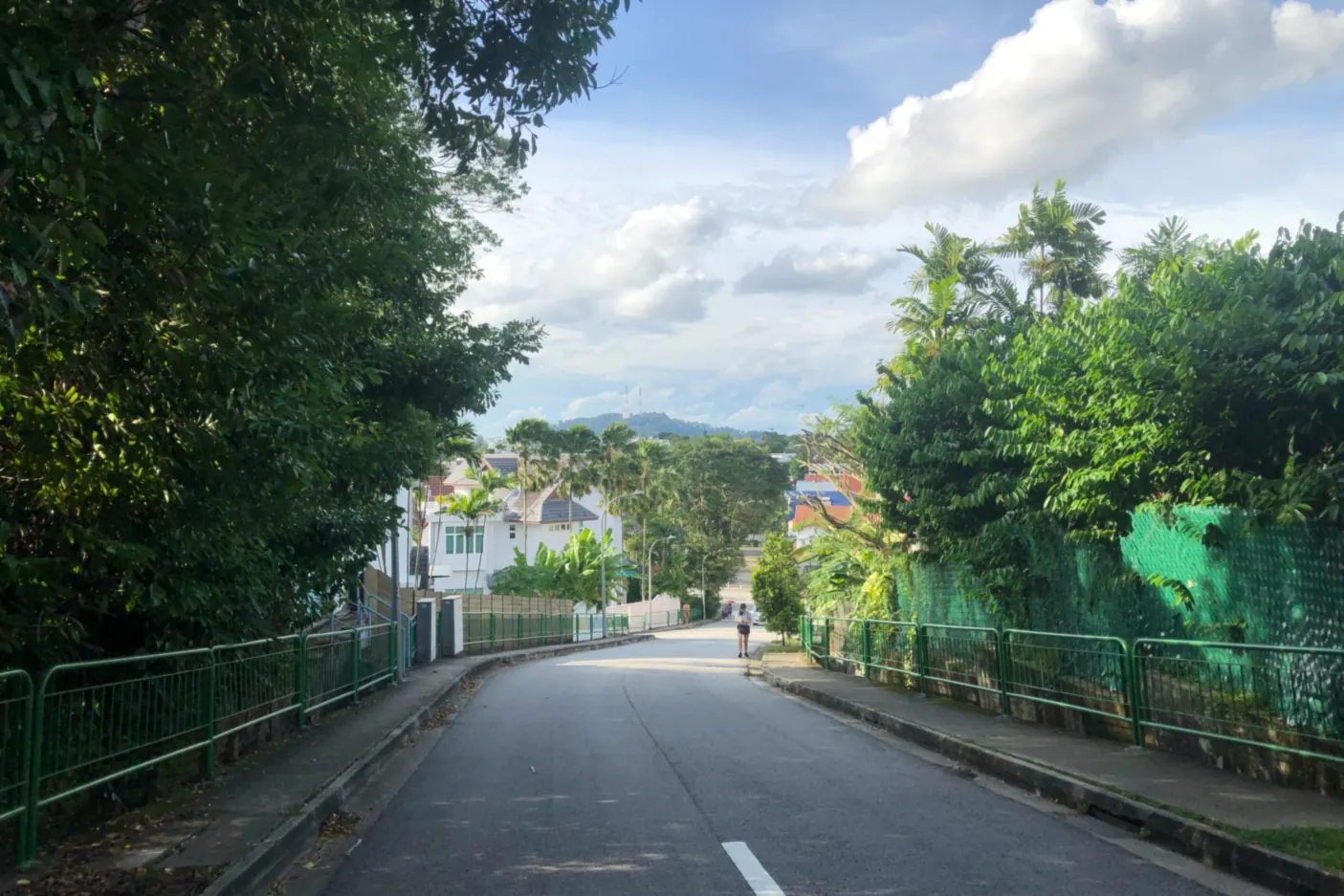
Widen the circle and the picture changes. For most of the 12, public housing makes up more than 40 per cent of homes within 3km, compared with less than 40 per cent within 2km. The pool of families applying from beyond 2km, ST noted, could look quite different from the population living closest to the schools.
For a buyer, the 2km track draws on a small catchment that is mostly private housing, while the other track could open the schools, as NUS associate professor Vincent Chua put it, to families from a much wider area. ST was also clear that its count measures housing stock, not families or school-age children. So I would not turn these percentages into odds. They describe the neighbourhood, not the ballot.
Does the school-zone premium still make sense?
The reports give us the ingredients rather than the answer.
One agent, Denise Tan, told ST that clients are often prepared to pay more for homes within 1km of their preferred school, describing a “1km halo effect”. Another, Ronald Lam, said many people were excited because “previously, a 1km radius was more limiting, especially for families with no affiliation”. Now, he said, “they have a better chance of getting a more suitable location and maybe not having to pay so much”. But he also said demand for popular schools is unlikely to disappear simply because the rules have changed.
The academics framed it more sharply. Chua said the two-track scheme could “blunt the formula” that school-focused property advice relies on, by reducing the certainty that comes from living closer and making property-based strategies less predictable. SMU assistant professor Jacqueline Ho said it introduces more of a “luck factor” into Phase 2C at the 12 schools.
Here is how I read it. At these 12 schools, a premium paid mainly for proximity in Phase 2C was, in practice, a payment for certainty. The new rules hand some of that certainty to families farther away. They do not touch the reasons parents want these schools, which Chua said can come from academic reputation, history, alumni networks and affiliations with secondary schools, or what makes these neighbourhoods pleasant to live in. But if the ballot was the main reason for stretching your budget, that case is weaker than it was.
At these 12 schools, living close in Phase 2C used to buy certainty. Some of that certainty now belongs to families farther away.
I would be just as careful in the other direction. The agents said it is too early to tell whether buying behaviour will change, and I will not guess. An owner near one of these schools has no reason to panic, and a buyer has no reason to assume a discount is coming.
If proximity counts for less, what should the home be judged on?
On being a home. That sounds obvious, but the ST report shows how easily it gets lost.
Prab Nathan, a former teacher who is now a property agent, described a family with two children who moved from a five-room HDB flat to a two-bedroom condo largely to be closer to Nanyang Primary School. He had cautioned them about whether the purchase made financial sense and whether the smaller space would fit the family in the long run. “A property is a huge, illiquid financial commitment,” he said. “The home must make sense for the family’s finances, space requirements and longer-term plans first.”
Another agent, Jason Chew, put it in one line: “Don’t just try to buy a school and forget to buy a home.”
I agree with both. After seventeen years of working with families, many with more than one generation under one roof, I would add this: primary school is one season inside a home you may hold for a decade or more. The questions that decide that decade are the ones you would ask anywhere. Does the layout take a grandparent and a growing child without someone giving up a room? Does the monthly commitment leave space for everything else? Would you still choose this street if the school were not on it?
There is also the exit. Agents told ST that some families weigh whether a home could later appeal to other parents, what they call an “exit strategy”. At these 12 schools, the next family’s reason to pay extra for proximity in Phase 2C is not what it was, so I would not rest a resale plan on it. I have written before about treating your moves as a sequence rather than a series of one-offs. A purchase made mainly for one ballot is the definition of a one-off.
Is a longer commute a fair trade for a wider search?
For families outside 2km, the new track is an opening. It also raises the practical question ST put plainly: how will their children get there every day?
“Expanding geographical access on paper only works in practice if daily commuting is made feasible and manageable for young children and working parents,” Chua said.
Distance alone does not tell the full story, and ST’s examples show why. Families in Bedok South and the upcoming Bayshore precinct could reach Tao Nan School, CHIJ (Katong) Primary and Ngee Ann Primary School via the Thomson-East Coast Line, a journey of three or four stops taking around eight minutes, excluding waiting and walking time. Families near Bukit Panjang MRT station, even though their homes are 5km to 6km away, are four or five Downtown Line stops from Methodist Girls’ School (Primary) and Pei Hwa Presbyterian Primary School, around 10 to 12 minutes, again excluding waiting and walking.
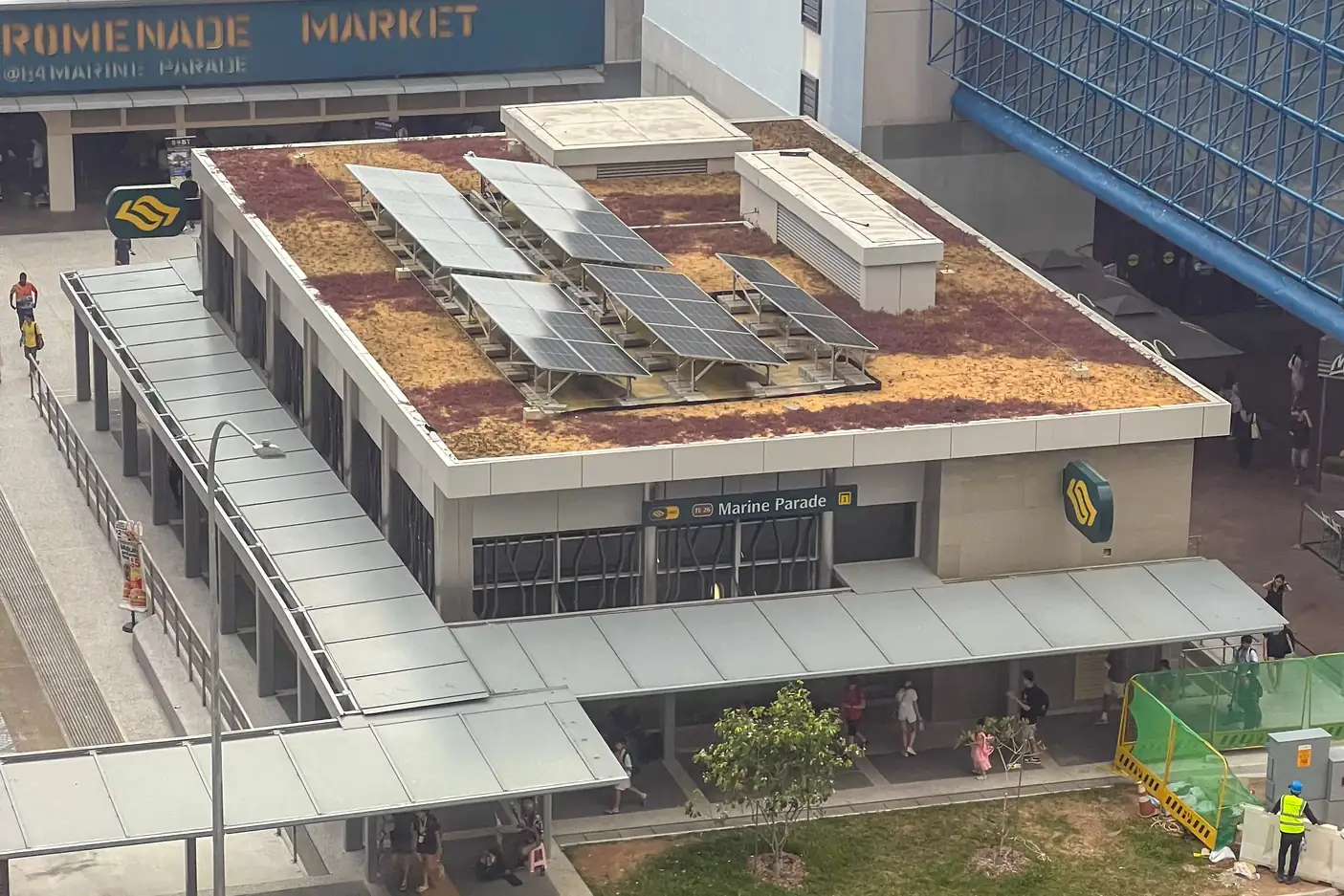
Not all 12 are that well connected. St Margaret’s School (Primary), Raffles Girls’ Primary School, Anglo-Chinese School (Junior) and Nanyang Primary School are farther from their nearest transit node than the average primary school in Singapore. For a child from outside the neighbourhood, that extra walk could add to an already longer journey.
So if your family is widening its search, measure it in minutes and transfers. As ST noted, a home several kilometres away with a direct MRT or bus connection could make a simpler commute than one closer in that needs several transfers. Do the trip at the hour your child would do it, with a school bag, before it shapes a purchase.
Measure the school run in minutes and transfers, not kilometres. The map flatters distance. A weekday morning does not.
So what should a family do before the 2027 registration? Mostly, slow down. If you own near one of these schools and the home works for you, nothing here is a reason to sell. If you are about to buy, separate the two decisions: choose the home on space, finances and longer-term plans, then look at the schools you can reach from it, including the ones the wider track now puts in play. One parent in the ST report chose to rent near a school rather than buy, for more flexibility if plans did not work out. That keeps a school decision from becoming a property decision.
For the families I work with, a home is a decade-long decision and a school is one input into it. If you would like a second opinion on how a home near one of these schools, or one a little farther out, fits your family’s longer plans, I am always glad to talk it through.
The numbers
| Change | Two-track system for Phase 2C at 12 primary schools |
| Starts | 2027 Primary 1 registration exercise |
| Where | Bukit Timah, Newton and Marine Parade |
| Phase 2C places at the 12 | 60, split 30 within 2km and 30 beyond 2km; no distance priority within either group |
| Phase 2C at most other schools | Minimum places rise from 40 to 60 |
| How the 12 were chosen | Public housing under 40% of homes within 2km; selected on housing mix, not popularity or oversubscription |
| Public housing within 2km | 5% to 37% across the 12; Raffles Girls' Primary School 5%, the lowest of any primary school in Singapore |
| Public housing within 3km | More than 40% of homes for most of the 12 |
| Farther from transit than average | St Margaret's School (Primary), Raffles Girls' Primary School, Anglo-Chinese School (Junior), Nanyang Primary School |
Questions families ask
Which schools are affected by the new Phase 2C two-track system?
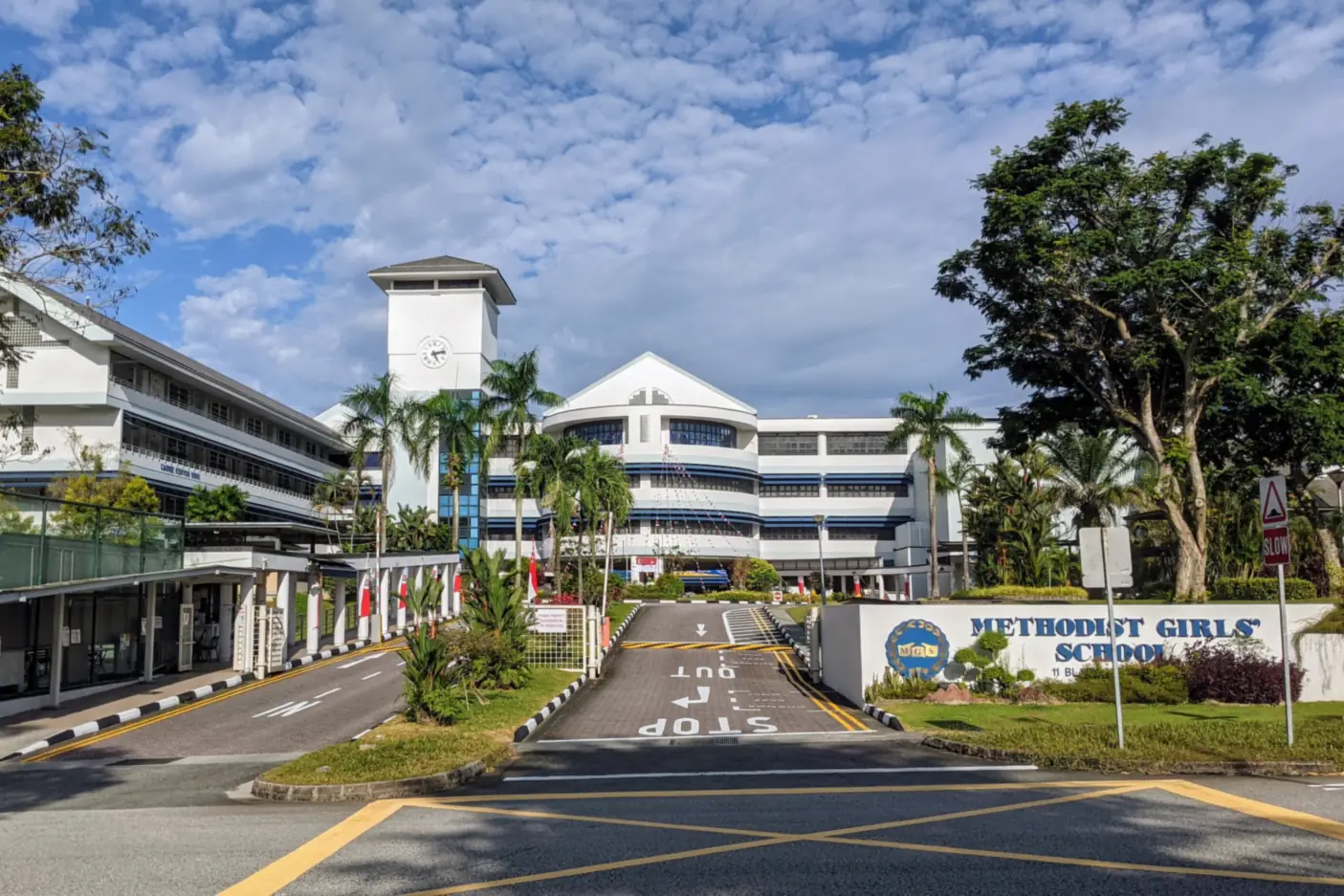
Twelve primary schools in Bukit Timah, Newton and Marine Parade where public housing makes up less than 40 per cent of homes within 2km. Schools named in The Straits Times' reporting include Raffles Girls' Primary School, Nanyang Primary School, Anglo-Chinese School (Junior), Methodist Girls' School (Primary), Pei Hwa Presbyterian Primary School, St Margaret's School (Primary), Tao Nan School, CHIJ (Katong) Primary and Ngee Ann Primary School. Check the Ministry of Education's own list before you plan around it.
Does living within 1km of these schools still help in Phase 2C?
At these 12 schools, from the 2027 registration exercise, the 60 Phase 2C places are split between children within 2km and those farther away, and distance priority does not apply within either group. So in Phase 2C at these schools, a home 1km away no longer ranks ahead of another home inside 2km. This is about Phase 2C only; check how the other phases apply to your family.
Will property prices near these schools fall?
Nobody knows yet. Agents told The Straits Times that reactions have been mixed, with some parents reconsidering the need to pay a premium to live near a preferred school, but that it is too early to tell whether purchasing behaviour will change. One agent said demand for popular schools is unlikely to disappear simply because the rules have changed. I would not buy or sell on a price forecast here.
Should we still move closer to a popular school for Primary 1?
Only if the home works for your family on its own terms. At these 12 schools, moving closer now buys less certainty in Phase 2C than it did. Choose the home on space, finances and longer-term plans first, then look at the schools you can reach from it. If you want to stay flexible, one parent in the ST report chose to rent near a school rather than buy.
How far is too far for a Primary 1 commute?
Measure it in minutes and transfers, not kilometres. The Straits Times found that families near Bukit Panjang MRT station, 5km to 6km from Methodist Girls' School (Primary) and Pei Hwa Presbyterian Primary School, are four or five Downtown Line stops away, around 10 to 12 minutes excluding waiting and walking. But four of the 12 schools are farther from their nearest transit node than the average primary school, which can lengthen the trip. Try the journey at the real hour before it shapes a purchase.
Reporting referenced: The Straits Times. Analysis and views are Adrian Lim's own.
Talking it through beats reading about it.
If this story touches a decision your family is weighing, send Adrian a message. A first conversation costs nothing and commits you to nothing.
WhatsApp Adrian · +65 8183 2333More from Insights
Should Every Property Move Leave You Wealthier? The Honest Version
Treating your moves as a sequence rather than a series of one-offs is genuinely better thinking. It also breaks in two places, and both of them are expensive.
The S$2.93 Million Leonie Gardens Profit Took 28 Years. That's the Story.
Everyone is quoting the profit. Almost nobody is doing the division.
Long Island and the East Coast: What Happens When the Sea Moves
A story about two lighthouses is really a story about the biggest rewrite of Singapore's eastern coastline in a generation — and what it asks of the families who live along it.