Long Island and the East Coast: What Happens When the Sea Moves
A story about two lighthouses is really a story about the biggest rewrite of Singapore's eastern coastline in a generation — and what it asks of the families who live along it.
The short read
Long Island, announced in 2023, could reclaim over 800ha off the East Coast — about twice the size of Marina Bay — pushing the shoreline away from today's coastal homes. Sea views along Marine Parade and East Coast will change, but the value story is redistribution, not loss: prestige stock tends to gain scarcity, homes beside active works sit quietly for years, and inland pockets that pick up new connectivity often outperform.
For east-side families the real question is not whether the coast changes — it will — but whether your holding timeline can carry a decade of cranes, and whether the home still fits the family on the other side of them.
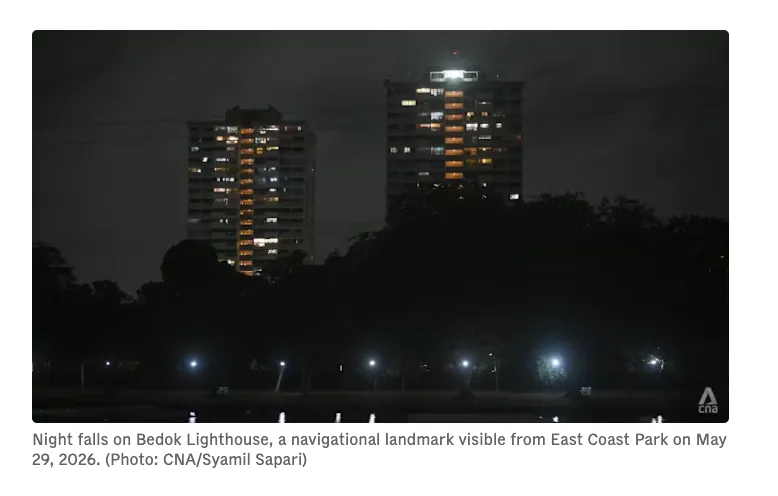
CNA ran a story this week that most property readers would have scrolled past. Singapore’s lighthouses, Fabian Koh reported, face an uncertain future as coastal developments close in. In the west, Tuas Port is set to block Sultan Shoal Lighthouse — built in 1895 — from the sea. In the east, the Long Island development would push the coastline away from Bedok Lighthouse, leaving it no longer at the water’s edge.
The Maritime and Port Authority says it has no plans to relocate either lighthouse. But the experts CNA spoke to were candid that development on this scale makes some change likely. One of them, marine engineer Daniel Tan, put it plainly: once Tuas Port is fully operational, Sultan Shoal’s visual prominence from the sea could change considerably.
It reads as a heritage story. I read it as a property story — one of the most important ones for east-side owners this year. Because if the sea can move away from a lighthouse, it can move away from your balcony.
The coastline is being rewritten, again
Here is the detail most people miss: Bedok Lighthouse is not a white tower on a rock. It sits on top of the 25-storey Lagoon View condominium on Marine Parade Road, its light roughly 76 metres up. A working navigational light, on a residential block, on land that was itself reclaimed from the sea within living memory. Marine Parade exists because Singapore moved the coastline once before.
Now Long Island proposes to do it again. Announced in 2023, it could reclaim over 800 hectares off the East Coast — about twice the size of Marina Bay. One expert in the CNA piece sketched a possible structure of three segments: one for commercial and residential use, one for recreation, and one serving Changi’s hub ambitions. Between the new land and the current shore, a new reservoir.
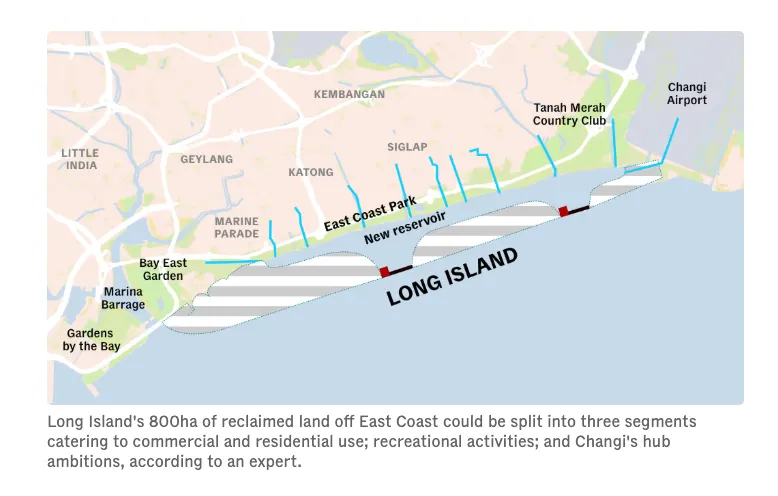
Look at that map the way a family should, not the way a trader does. Everything from Marina Parade through Katong and Siglap to Tanah Merah currently enjoys the psychological premium of being “the coast”. Long Island redraws where the coast is. The question is what that does to the homes that stay behind the line.
Will East Coast homes lose their sea views?
Some will, eventually. There is no gentle way to say it, and I would rather say it plainly than have a family discover it mid-hold. If the reclamation proceeds as sketched, the water’s edge moves seaward, and today’s front-row units become second row — facing, for a stretch of years, works and cranes, and after that, a reservoir and new districts rather than open sea.
A family came to me last month with a coastal condo they had held since 2011. The question was not whether to sell. It was quieter than that: would their grandchildren still recognise the view?
I gave them the only honest answer available. No — and that has always been the deal.
A sea view in Singapore has never been a permanent feature; it is a view of the current version of the map.
The East Coast’s charm was built on exactly this kind of change. The park those grandchildren cycle through is reclaimed land. What families own along Marine Parade Road was once beachfront, then became parkfront, and held its value through the transition because what replaced the beach was an amenity people wanted to live beside. That is the precedent that matters here, and it cuts both ways: the view changes, and the neighbourhood can still come out ahead — if what gets built is worth living next to, and if you can hold through the years when it is a worksite rather than a waterfront.
What actually happens to values when the sea moves?
Across seventeen years and five market cycles, I have watched infrastructure builds of this scale before, and the pattern is rarely the one the headlines suggest. It is not a wave that lifts or sinks a whole district. It is a redistribution, and it sorts homes into roughly three groups.
| Segment | Typical pattern near mega-reclamation |
|---|---|
| Prestige, genuinely scarce stock | Tends to gain scarcity value, not lose it |
| Mid-tier homes beside active works | Sits quietly for five to seven years |
| Inland pockets gaining new connectivity | Often outperforms, without a press release |
The first group — freehold landed in the Katong and Siglap conservation belt, heritage shophouses, the truly irreplaceable addresses — tends to benefit from precisely the change everyone fears. When the coastline becomes new and generic, old and specific becomes rarer. Scarcity is not where the sea is; it is where the history is.
The second group carries the real risk, and it is a timeline risk, not a value risk. Mid-tier stock within sight and sound of active reclamation tends to go quiet — fewer buyers, slower prints, sentiment doing its work — for five to seven years while the cranes are the view. Owners who never needed to sell during that window barely notice it in hindsight. Owners forced to sell into it feel every basis point.
The third group is the quiet one. Pockets a few streets inland, which never had the sea view priced in, often pick up the new connectivity, the reservoir frontage, the upgraded amenity — without ever having paid the coastal premium. Across the cycles I have watched, this is where the surprises live.
When the sea moves, the value does not disappear. It redistributes — and the map of winners is never the map people expect.
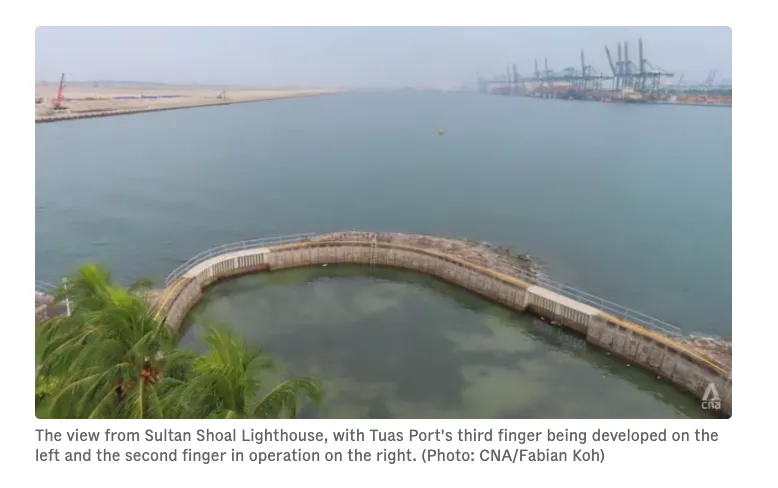
The west coast is running this experiment ahead of us. Sultan Shoal Lighthouse is already flanked by two of Tuas Port’s reclaimed “fingers”, with a fourth being built that will encroach further. What was open sea in every direction is becoming the inside of a port.
How should a family read a multi-decade project?
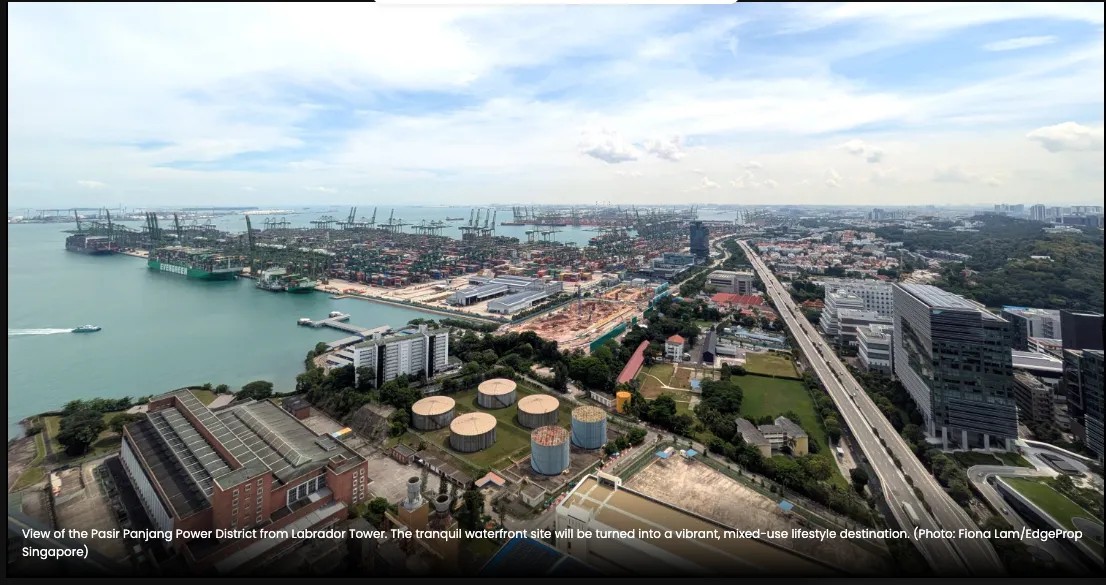
The same way I read the Greater Southern Waterfront for families asking about Pasir Panjang: the story arrives early, the liveability arrives late. Long Island was announced in 2023. There is no confirmed completion date, and nothing in the public record suggests one is close. Projects of this scale are measured in decades — which means the announcement, the reclamation, the construction and the finished amenity will each land on different owners at different points in their family’s life.
That is why the useful question is never “what will Long Island do to East Coast prices?” It is: where does your family’s timeline intersect with the project’s?
A household planning to hold a Marine Parade home for twenty years will likely sell into a neighbourhood with a reservoir, new parkland and a second waterfront — a stronger story than today’s. A household that needs to right-size in four years may be selling exactly when the district is a worksite and sentiment is softest. Same home, same project, opposite outcomes. The project’s clock does not care about yours; you have to do the matching yourself.
And the future-buyer test still applies, just with a new map. Whoever buys your East Coast home from you in fifteen years will not be buying today’s view. They will be buying whatever stands between your window and the new shoreline. If you cannot describe that buyer and what they are paying for, that — not the lighthouse story — is the thing to sit with.
The seven-year question, for east-side families specifically
None of this tells a family what to do with their home, because that part is specific. Which stretch of coast. Which lease. Which generation the home has to hold. A freehold Siglap terrace, a 99-year Marine Parade high-floor with a sea view, and a Bedok flat two streets inland are three different positions in the redistribution, not one “East Coast market”.
What I would say to the families I serve — second or third property, parents moving in, kids moving out, decade horizons — is this. The coast changing is not the risk. The risk is a mismatch between the project’s timeline and yours: needing liquidity in the exact years the cranes are the view, or paying a sea-view premium today for a view that has a shorter life than your hold.
If the question has started surfacing at 2am — the seven-year one, not the seven-day one — that is usually the right time to think it through out loud. Not to list. Just to look honestly at where your home sits in the pattern, while the decision is still yours to make on your own clock. That is the work I do, and it starts well before anyone talks about selling.
The lighthouse keepers, by the way, are staying. Four of them still maintain all five lighthouses, because even in an age of GPS, mariners want a trusted, verifiable mark. Families deciding through a decade of change could do worse than the same principle: keep your fixed points, verify the story against the map, and never navigate on the headlines alone.
The numbers
| Long Island announced | 2023 |
| Potential reclamation | Over 800ha — about twice the size of Marina Bay |
| Possible structure | Three segments: commercial/residential, recreation, Changi-linked |
| Bedok Lighthouse | Atop the 25-storey Lagoon View, Marine Parade Road; light at ~76m |
| Lighthouses managed by Singapore | Five — Sultan Shoal, Bedok, Pulau Pisang, Horsburgh, Raffles |
| Sultan Shoal Lighthouse built | 1895 |
| MPA relocation plans | None currently for Sultan Shoal or Bedok |
Questions families ask
Will Long Island block the sea view from East Coast and Marine Parade condos?
For many units facing the sea today, yes — eventually. Long Island would push the coastline seaward by design, and the CNA reporting notes even Bedok Lighthouse would no longer sit at the water's edge. The honest framing is that a sea view in Singapore has always been a view of the current map, not a permanent feature. What replaces it matters too: a new reservoir, parkland and a second waterfront are part of the plan.
When will Long Island actually be built?
There is no confirmed completion date. It was announced in 2023 and reclamation on this scale runs in decades, not years — think staged works, studies and phased land creation. That long runway is precisely why owners should match their own family timeline to it rather than react to headlines now.
Does land reclamation hurt East Coast property values?
Not in the way people fear. Across the infrastructure builds I have watched over seventeen years, value redistributes rather than disappears. Genuinely scarce prestige stock tends to hold or gain. Homes immediately beside active works go quiet for five to seven years. And inland pockets that pick up new connectivity often do better than anyone predicted. The question is where your specific home sits in that pattern.
Should I sell my East Coast home before reclamation starts?
Not because of a headline. If the home still fits your family and your horizon is ten years or more, a changing coastline is something you live through, not flee. If you were already thinking about right-sizing, the calmer move is to think it through now, on your own clock, before construction sentiment starts pricing itself into negotiations.
What is Long Island in Singapore?
A proposed reclamation of over 800ha off the East Coast, announced in 2023, roughly twice the size of Marina Bay. It serves coastal protection as well as land supply, and could be split into three segments — commercial and residential use, recreation, and a portion tied to Changi's hub ambitions — with a new reservoir between it and today's shoreline.
Reporting referenced: CNA. Analysis and views are Adrian Lim's own.
Talking it through beats reading about it.
If this story touches a decision your family is weighing, send Adrian a message. A first conversation costs nothing and commits you to nothing.
WhatsApp Adrian · +65 8183 2333More from Insights
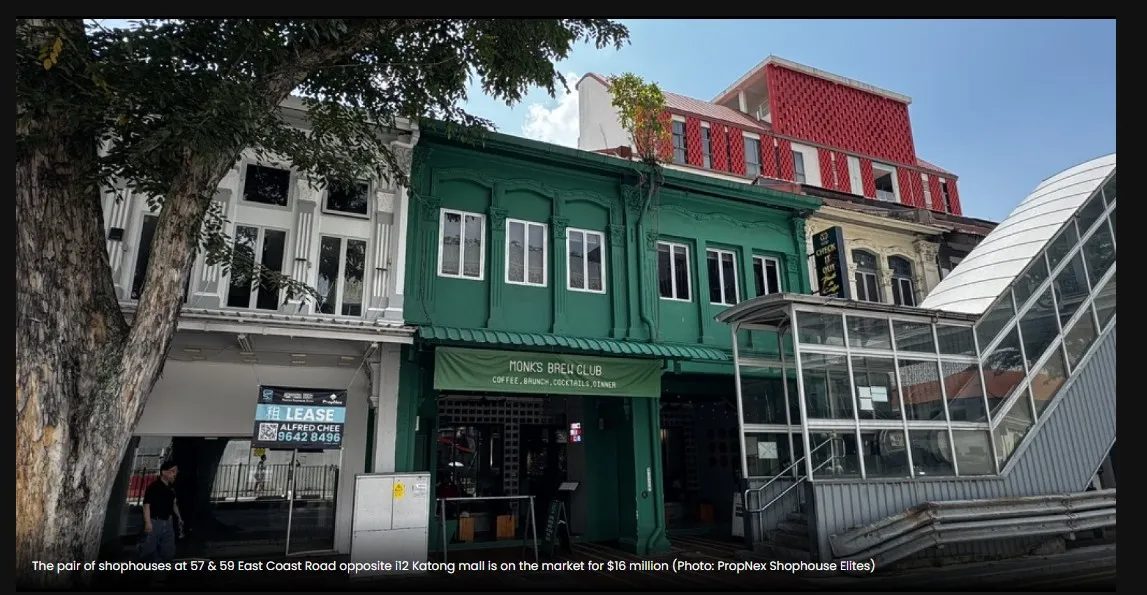
A S$16M Ask on East Coast Road: How to Read a Shophouse Listing
A listing price is a question the market asks itself. The answer arrives later, quietly, in the print.
The Greater Southern Waterfront: Reading a 30km Story on Family Time
A 30-kilometre transformation is not one decision. It is several, on different clocks — and the clock that matters most is your family's.
Therme at Marina South: What a 2030 Wellness Hub Does to Home Values
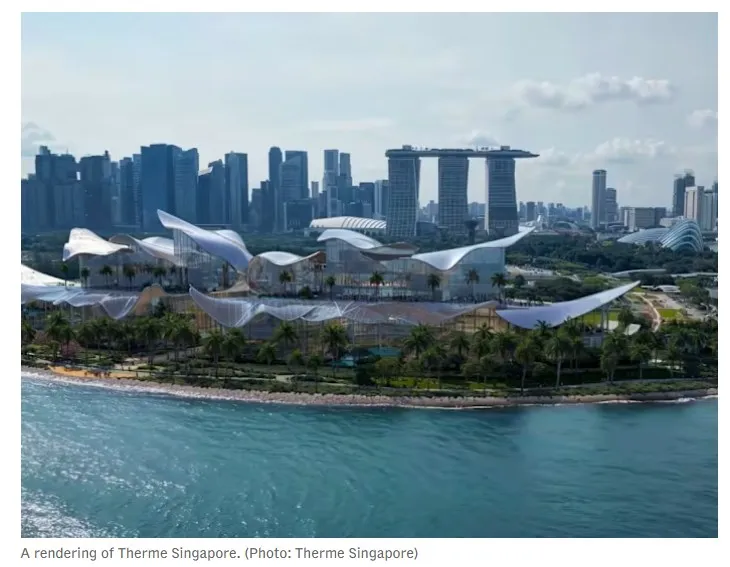
A 720,000 sq ft wellness destination is a real catalyst for Marina South. It is also five years away, and that gap is where families get the decision wrong.