Property Sentiment Rebounded in 2Q2026, Except on Suburban Homes
This is a survey of how senior executives feel, not a record of what homes sold for. Read that way, its most useful line is the one that went down.
The short read
Industry sentiment in Singapore real estate rebounded in 2Q2026. NUS's Composite Sentiment Index rose to 5.6 from 4.9, with the Current index at 5.6 and the Future index at 5.5, helped by stronger-than-expected economic growth in 1H2026. Offices led, with their current net balance jumping to 36% from 0%. But this is a quarterly survey of senior real estate executives, not a measure of transaction prices.
Suburban residential sentiment went the other way: its current net balance fell to –14% from 15%, which NUS's Prof Qian Wenlan put down to affordability constraints, supply pressures and policy changes. Half of developers expect new-launch prices to stay unchanged over the next six months. For families, the takeaway is to read sentiment alongside your own timeline and stress-test your loan, because a global slowdown, inflation and interest rates top the industry's own risk list.

Most of the property numbers that reach families are prices: a record psf, a resale that made money, a launch weekend that sold well. This week’s number is a different kind. It measures mood, and that makes it both useful and easy to over-read.
As EdgeProp reported on September 24, industry sentiment in Singapore’s real estate market rebounded in 2Q2026, according to the latest Real Estate Sentiment Index (Resi) published by the National University of Singapore (NUS). The Composite Sentiment Index rose to 5.6, from 4.9 in the preceding quarter. The Current Sentiment Index also rose to 5.6 from 4.9, and the Future Sentiment Index climbed to 5.5 from 5.0.
The improvement marks a turnaround from 1Q2026, when all three indices weakened amid heightened geopolitical tensions in the Middle East. Prof Qian Wenlan, director of the NUS Institute of Real Estate and Urban Studies (Ireus), attributed it to a more sanguine economic outlook after Singapore’s stronger-than-expected performance in the first half of the year.
But the headline hides a split that matters more to families than the rebound itself. Offices led the recovery. Sentiment towards suburban homes went the other way, and sharply.
What does the sentiment index measure, and what doesn’t it?
Start here, because it decides how much weight the numbers can carry.
The Resi is produced by NUS’ Department of Real Estate and Ireus. It tracks perceptions and expectations of the real estate market through quarterly surveys of senior executives in Singapore real estate firms. The Current Sentiment Index tracks changes over the past six months. The Future Sentiment Index measures expectations for the next six months. Together they make up the Composite.
So this is a survey of how the industry feels. It is not a price index, and it does not record a single transaction. When the Composite moves from 4.9 to 5.6, it tells you senior people in the business feel better than they did a quarter ago. It does not tell you what the unit next door sold for, or what your home is worth.
That is not a reason to ignore it. The people surveyed sit close to launch plans, land costs and financing decisions. But mood among professionals is one input. It is not a verdict on your next move.
Sentiment tells you how the industry feels about the next six months. Your plan has to survive the next ten years.
Where did the rebound actually come from?
Much of it came from commercial property, by NUS’s own account.
Offices recorded the strongest improvement of any sector surveyed. Their current net balance surged 36 percentage points quarter on quarter, to 36% from 0%, its highest level in several years. The future net balance stood at 27%. One respondent cited a limited supply of new offices and a better economic outlook.
Business parks and hi-tech space rose to 5%, from –25% in 1Q2026. Industrial and logistics improved to +9%, from –5%. Qian noted that commercial space, including offices, business parks and industrial and logistics properties, contributed significantly to the rally. Retail stayed subdued: prime retail recorded a current net balance of –23%, and suburban retail –18%.
For a family buying a home, the point is simple. Brighter office sentiment is real, and it reflects a stronger economy. But it is not the market you buy a home in. I made a similar point when exports jumped in the second quarter: economic strength reaches housing slowly and unevenly, if it reaches your segment at all. If you read “property sentiment rebounds” and heard “home prices are about to move”, the survey does not support that jump.

Why has suburban home sentiment turned negative?
This is the part of the survey I would read twice.
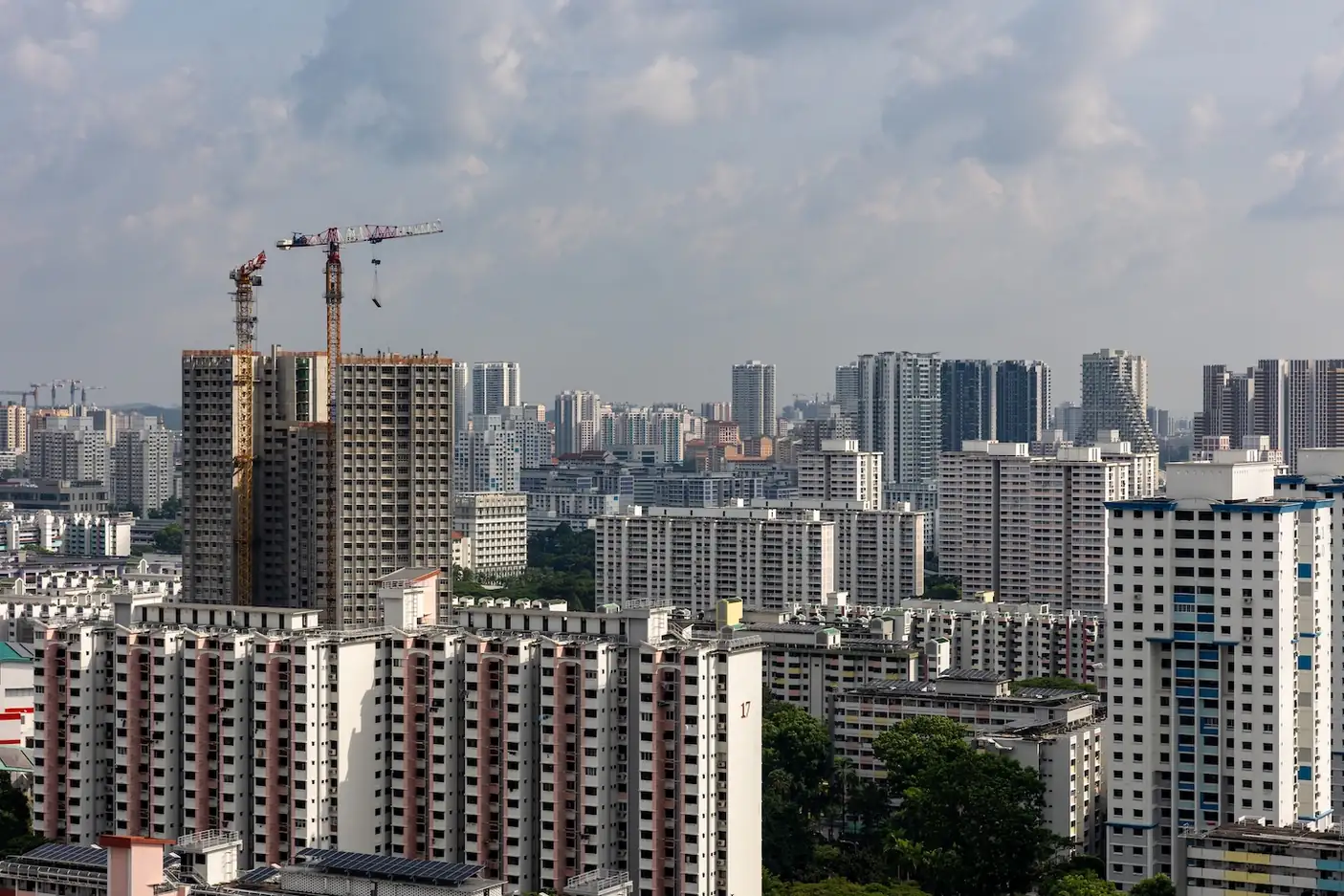
Sentiment towards suburban residential property weakened sharply. Its current net balance fell to –14% in 2Q2026, from 15% in the previous quarter, its first negative reading in over a year. Its future net balance fell from 15% to –5%. In plain terms, the executives surveyed now lean negative on the suburban home market, looking back and looking ahead.
Qian put it down to a combination of affordability constraints, supply pressures and policy changes. “Mass-market suburban housing is predominantly driven by domestic owner-occupiers and HDB upgraders,” she said. With suburban new launch prices reaching new highs, she added, affordability has become a greater constraint and buyer resistance appears to have emerged.
She also pointed to the recent increase in income ceilings for Build-To-Order flats and executive condos, to $16,000 and $18,000 respectively. That widens the pool of households eligible for subsidised housing, she said, and could reduce the urgency among some buyers to enter the suburban private market.
Prime residential fared better on current sentiment, with its net balance rising to 9% from 5%. But its future net balance stood at –14%. So the executives are not cheerful about prime’s next six months either. They are only mildly positive about the last six.
What should a family weighing suburban against prime take from that? Not that one is now the better buy. The survey does not say that, and I would not either. What it does say is that the suburban buyer, the owner-occupier and the HDB upgrader, is feeling the stretch. If that describes you, the hesitation you feel is not a personal failing of nerve. It is part of what the survey is picking up. And if the higher income ceilings now put a BTO flat or an executive condo within reach for your household, that is worth checking before you commit to a suburban private launch at a new high.
What do developers expect for new-launch prices?
Mostly, nothing dramatic.
Half of the developers surveyed expect prices at new residential launches to remain unchanged over the next six months. Some 30% expect moderately higher prices, and 20% anticipate moderately lower prices. On volume, 70% expect the number of new launches over the next six months to stay broadly unchanged, up from 60% in the previous quarter. Another 20% expect moderately more launches, and 10% moderately fewer.
Two other readings sit underneath that. Concern over an excessive supply of new launches rose, with 18.2% of respondents naming it as a risk, compared with 5% in 1Q2026. Concern over further government demand-side cooling measures fell to 13.6%, from 40%. And costs stay front of mind: 90% of developers expressed concern over building material costs, 80% over financing and labour costs, and 70% over land costs.
Put together, that does not read like an industry preparing to cut prices broadly. It reads like developers who expect to hold prices steady while watching costs and supply.
For a family choosing between a new launch and a resale, that has a practical consequence. If you are waiting for new-launch prices to fall before you act, only one in five developers surveyed expects moderately lower prices. So compare what is actually in front of you. A resale is a finished home you can stand in, with a price you can check against its neighbours. A new launch is a floor plan and a completion date. Weigh them on total price, on the layout you would really live in, and on when you actually get the keys, not on the hope that one side blinks first. I wrote about how a launch’s scale shapes its pricing in the Thomson Reserve piece.
Should a sentiment rebound change your timeline?
Not on its own, and certainly not as a reason to stretch.
Look at what the same executives flagged as the biggest risks to sentiment. A slowdown in the global economy, and rising inflation and interest rates, were the most commonly cited, each named by 81.8% of respondents. Job losses and a decline in the domestic economy were cited by 59.1%. Rising construction costs, by 45.5%.
In other words, the people who feel better this quarter are also clear about what could undo it. Interest rates sit near the top of that list, and interest rates decide whether a mortgage that feels comfortable today stays comfortable.
A rebound in sentiment is a better backdrop. It is not a green light to borrow to the edge.
So here is how I would use this survey. Read it alongside your own timeline, not instead of it. If your family needs to move in the next year, for a school, for a parent, for space, the survey does not change that. If you have no pressing reason to move, a better mood in the industry is not one. And whichever camp you are in, stress-test the loan. Ask whether the monthly payment still works if rates rise, if one income pauses, or if the move takes longer than planned. Those are the same risks the industry is naming about itself.
For the families I work with, often more than one generation under one roof and holding a home for a decade or more, the useful question is never whether the market feels better this quarter. It is whether the home still fits, and the numbers still hold, in a quarter when it doesn’t. If you would like to talk that through on your own figures, suburban or prime, new launch or resale, I am glad to have that conversation.
The numbers
| Survey | NUS Real Estate Sentiment Index (Resi), a quarterly survey of senior executives in Singapore real estate firms |
| Composite Sentiment Index | 5.6 in 2Q2026, from 4.9 in 1Q2026 |
| Current / Future indices | Current 5.6 (from 4.9); Future 5.5 (from 5.0) |
| Offices | Current net balance 36% (from 0%); future net balance 27% |
| Suburban residential | Current net balance –14% (from 15%); future net balance –5% (from 15%) |
| Prime residential | Current net balance 9% (from 5%); future net balance –14% |
| Developers on new-launch prices, next 6 months | 50% unchanged, 30% moderately higher, 20% moderately lower |
| Most-cited risks | Global slowdown; rising inflation and interest rates (81.8% of respondents each) |
| Reported | EdgeProp, September 24, 2026 |
Questions families ask
What is the NUS Real Estate Sentiment Index?
The Real Estate Sentiment Index (Resi) is produced by NUS' Department of Real Estate and its Institute of Real Estate and Urban Studies (Ireus). It tracks perceptions and expectations of the market through quarterly surveys of senior executives in Singapore real estate firms. The Current Sentiment Index covers changes over the past six months, the Future Sentiment Index covers expectations for the next six months, and the two are combined into the Composite Sentiment Index. It measures how the industry feels, not what homes sold for.
Does a rebound in the sentiment index mean home prices will rise?
Not by itself. Commercial property contributed significantly to the 2Q2026 rebound, with offices recording the strongest improvement, while sentiment towards suburban residential property fell sharply. A survey of executives' mood is a useful early read on the industry, but it is not a price index and it does not record transactions. I would not treat it as a forecast for the home you own or want to buy.
Why did suburban residential sentiment fall in 2Q2026?
NUS's Prof Qian Wenlan attributed it to a combination of affordability constraints, supply pressures and policy changes. She noted that mass-market suburban housing is driven mainly by domestic owner-occupiers and HDB upgraders, and that with suburban new-launch prices at new highs, buyer resistance appears to have emerged. She also pointed to the higher income ceilings for BTO flats and executive condos, now $16,000 and $18,000, which widen the pool eligible for subsidised housing.
Will new-launch prices drop in the next six months?
Most developers surveyed do not expect that. Half expect prices at new residential launches to stay unchanged over the next six months, 30% expect moderately higher prices, and 20% expect moderately lower prices. Developers also flagged concern over building material, financing, labour and land costs. If you are waiting for a broad price cut before choosing between a new launch and a resale, the developers' own expectations do not point that way.
Should I buy now because property sentiment has improved?
Only if your family's own timeline says so. The same executives who feel better this quarter named a global slowdown and rising inflation and interest rates as the top risks, each cited by 81.8% of respondents. Use the survey as background, then stress-test your loan against higher rates and a pause in income. A better mood in the industry is not a reason to stretch your budget.
Reporting referenced: EdgeProp. Analysis and views are Adrian Lim's own.
Talking it through beats reading about it.
If this story touches a decision your family is weighing, send Adrian a message. A first conversation costs nothing and commits you to nothing.
WhatsApp Adrian · +65 8183 2333More from Insights

Exports Jumped 27.4%. Here's What That Does to Your Property Decision
A strong quarter is a real signal about the economy. It is a much weaker signal about whether this is your year to move.

Thomson Reserve: What 1,268 Units in One Address Does to Your Exit
Everyone models the entry price at a mega-launch. Almost nobody models the year six hundred of your neighbours can sell at the same time as you.
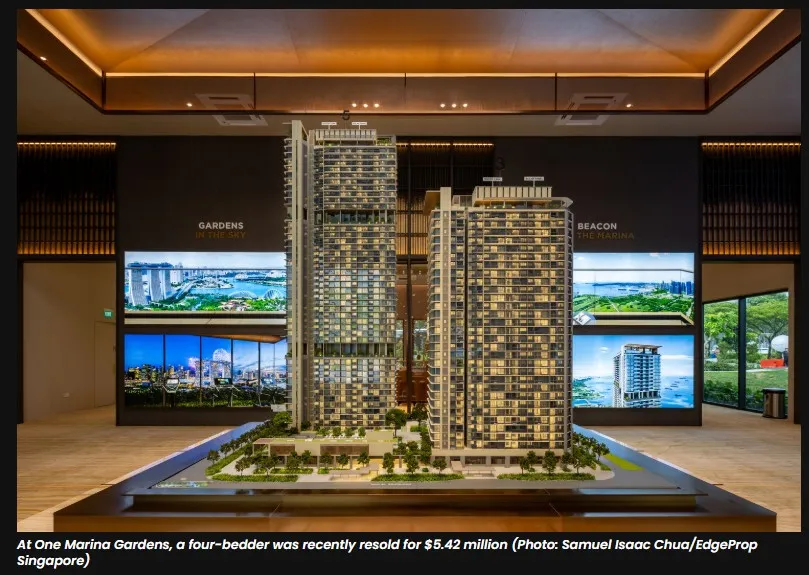
One Marina Gardens at $3,290 psf: What a Record High Really Signals
A new print at the top of District 1 is real news. It is also, for most Singapore families, scenery — and knowing the difference is worth more than the headline.