HDB Resale Prices Dip for a Third Straight Quarter: How to Read It
Million-dollar flats make the news. The index tells a quieter story: three soft quarters, steady buying and more supply on the way.
The short read
HDB's flash estimate, released on Oct 1, shows resale prices fell 0.2 per cent in the third quarter of 2026, the third quarterly fall in a row. The HDB Resale Price Index stood at 202.4, down from 202.8, and prices are down an estimated 0.6 per cent over the first nine months of 2026. Volume held up: 7,528 resale deals as of Sep 29, 5.2 per cent more than a year earlier.
This is a gentle cooling, not a slide. SRI's Mohan Sandrasegeran links it to more flats reaching their Minimum Occupation Period and more BTO supply. For upgraders, it means planning on a flat sale price, not a rising one. For right-sizers, the end of the 15-month wait-out has not set off a rush, which leaves room to choose carefully.
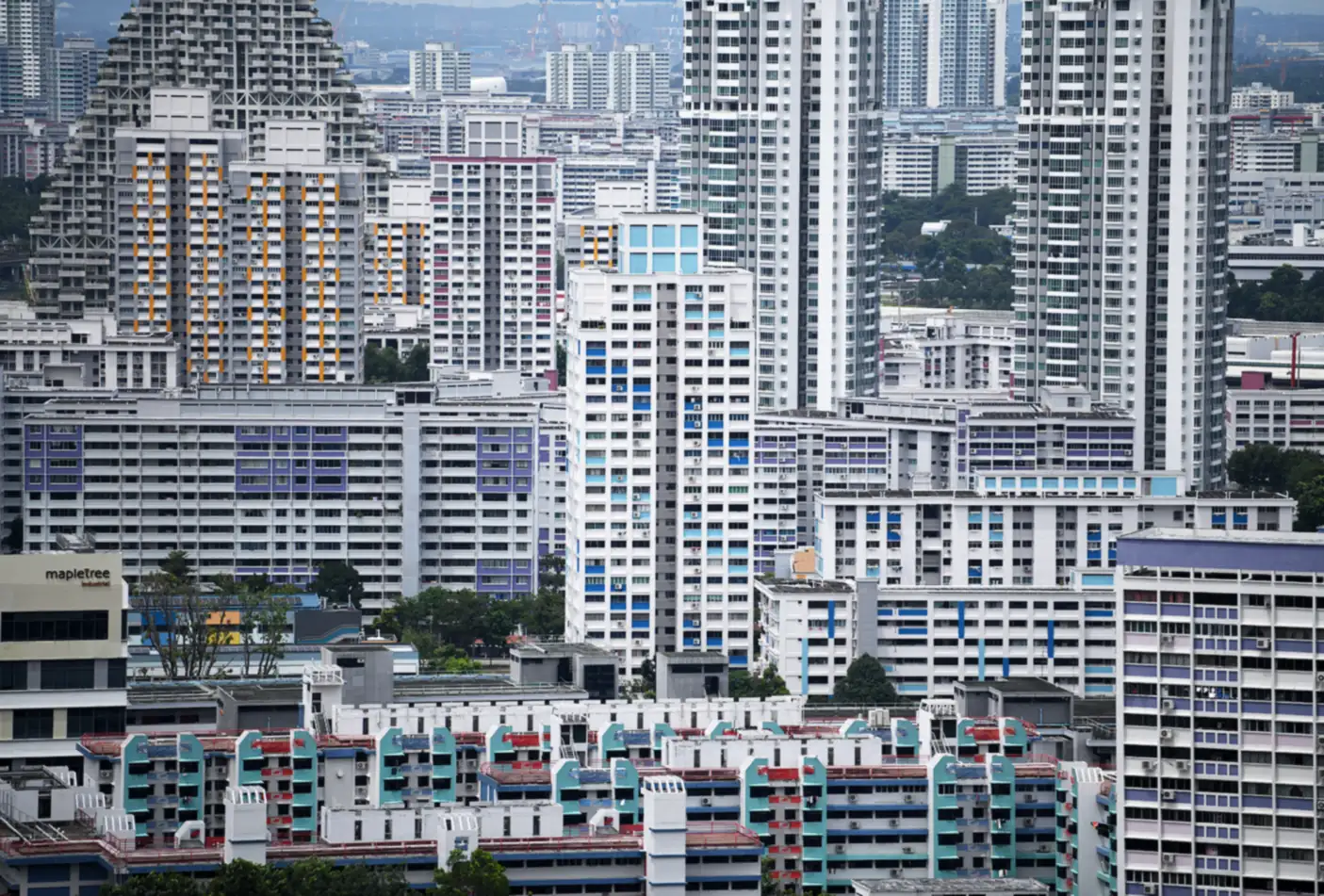
Last week, the HDB story was a run of record prices. This week, it is the opposite headline: resale prices down for a third quarter in a row. Both are true, and the gap between them is where most families get confused.
As CNA reported, HDB’s flash estimate, released on Thursday, Oct 1, shows resale prices fell 0.2 per cent in the third quarter of 2026 from the quarter before. The HDB Resale Price Index stood at 202.4, against 202.8 in the second quarter. Prices had already dipped 0.1 per cent in the first quarter and 0.3 per cent in the second. Before that, they were unchanged in the fourth quarter of 2025, after a 0.4 per cent rise in the third.
Taken together, resale prices are down an estimated 0.6 per cent over the first nine months of 2026. Mohan Sandrasegeran, head of research and data analytics at SRI, said that would be the weakest showing for the first nine months of a year since 2018, when prices fell 0.8 per cent over the same period.
Buying did not stop. As of Sep 29, 7,528 resale transactions were recorded in the quarter, 5.2 per cent more than the 7,157 over the same period last year. HDB called volume “broadly stable”.
I have spent seventeen years helping families sell one home and buy the next, often with more than one generation in the decision. Here is how I would read this number, and how it fits with the million-dollar flats you have been seeing in the news.
Is a third quarterly fall something to worry about?
Not on its own. Look at the size of the moves: 0.1, 0.3 and now 0.2 per cent. Over nine months, that adds up to an estimated 0.6 per cent. On a single flat, a move that small is easily outweighed by floor, facing, condition and remaining lease.
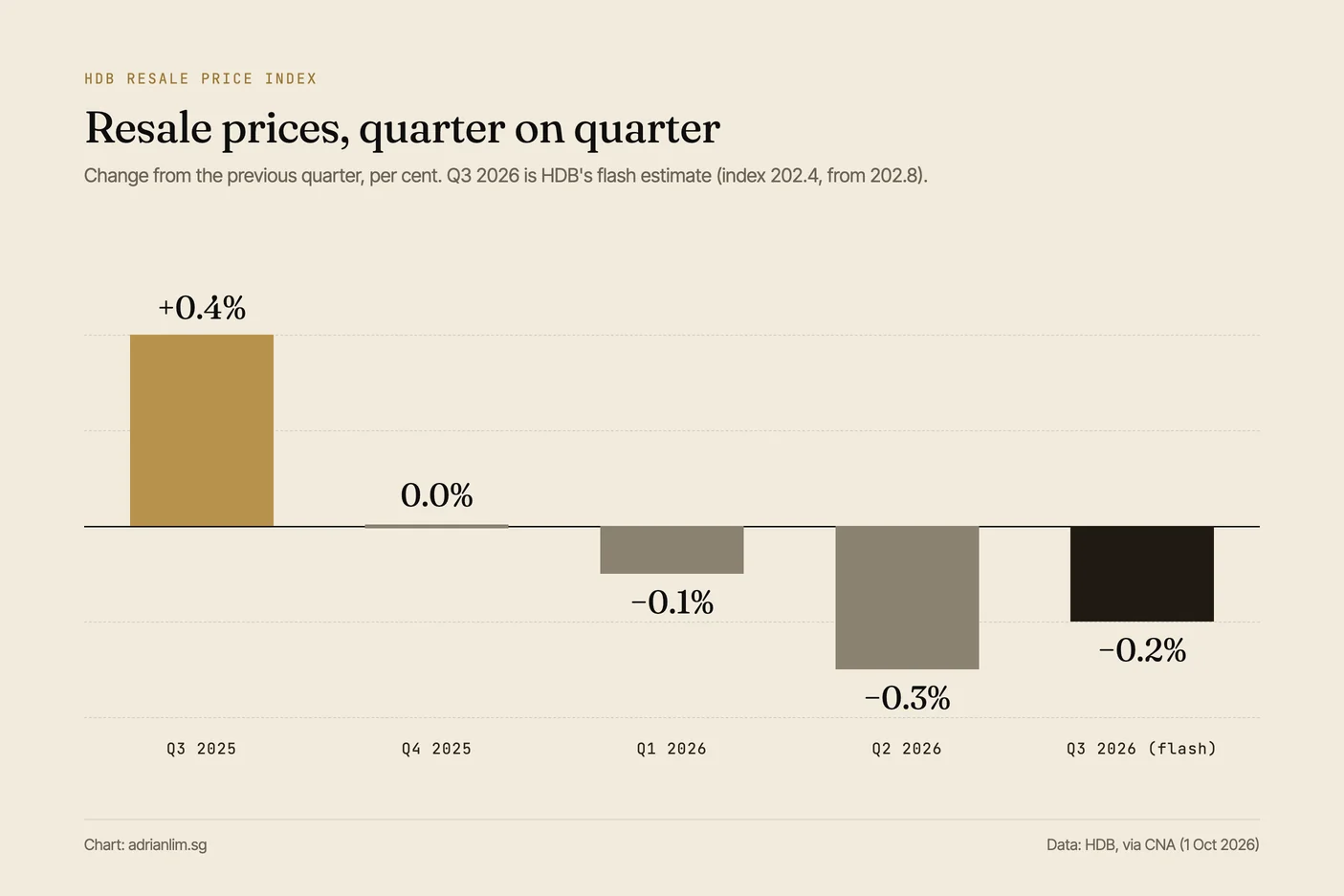
What matters more is the direction. The resale market has gone from rising to flat to slightly soft. That is a change in pace, not a fall off a cliff, and the volume figure backs that up. When a market is in real trouble, buyers usually step back first. Here, more flats changed hands than a year ago.
Three small dips with more buyers, not fewer, is a market catching its breath, not one losing its footing.
How does this fit with the record-priced flats?
This is a different story from the one I wrote about last month. In September’s HDB resale records, I looked at a handful of individual flats that set new highs in their towns. This piece is about the index, the measure of the market as a whole.
The two can move in opposite directions at the same time, and right now they are. A record tells you what one buyer paid for one large, well-located flat. The index tells you what is happening across thousands of ordinary transactions. Lee Sze Teck, senior director of data analytics at Huttons Asia, said some of the centrally located or five-room flats reaching their Minimum Occupation Period (MOP) this year may sell for at least a million dollars. That can happen while the broad index edges down.
If you are planning a sale, the index is closer to your reality than the headlines are. Use the records to understand what scarce flats can fetch. Use the index, and the recent deals in your own block, to set your budget.
Why is the resale market cooling?
The answer is mostly supply. Sandrasegeran pointed to three things: the growing pipeline of flats reaching their MOP as the year goes on, more resale flats available, and the ramp-up in BTO and Sale of Balance Flats supply in recent quarters.
“The broader range of housing options available to prospective buyers may have helped to ease some of the competitive pressure in the resale market,” he said.
The MOP number is worth holding on to. According to Lee, 13,484 flats will fulfil their five-year MOP in 2026. Every one of those is a household that can now choose to sell. Not all of them will, but the possibility alone gives buyers more to choose from.
New supply adds to that. Lee said more buyers may apply in November’s BTO exercise, now that the income ceiling has been raised from $14,000 to $16,000 a month. About 7,960 new flats will be launched across Bedok, Geylang, Sembawang, Tengah, Toa Payoh and Yishun, with community care apartments in Toa Payoh as well.
Did removing the 15-month wait-out change anything?
Less than many expected. The rule, introduced in September 2022 as a temporary measure, required private property owners and former owners to wait 15 months before buying a non-subsidised HDB resale flat. National Development Minister Chee Hong Tat announced on Jul 28 that it had met its purpose, and it was removed that day.
HDB said it has not seen a significant increase in either the prices or the number of resale flats bought by private home owners and former private owners since then. It will keep monitoring the market.
There is a shift at the larger end. Lee said the removal drove a rise in demand for five-room and larger resale flats, which saw the largest gain in sales volume in the quarter. Sandrasegeran expects some extra demand from private owners looking to right-size, but expects the effect on prices to stay manageable as more flats reach their MOP. He described the change as a “targeted adjustment”, not a broad relaxation of housing measures.
That matches what I would expect. Private owners who want a large HDB flat now have one less hurdle. But they are buying into a market where supply is growing, not one that is short of flats.
The wait-out is gone, but the rush did not come. For right-sizers, that is room to choose, not a reason to hurry.
What should upgraders and right-sizers take from this?
Upgraders first. If you are selling an HDB flat to move into a private home, the two markets are now moving at different speeds. The same day, URA’s flash estimate showed private home prices up 1.4 per cent in the third quarter, the eighth quarterly rise in a row according to Realion’s Christine Sun. Private prices are up an estimated 2.8 per cent over the first nine months, while HDB resale prices are down 0.6 per cent.
That gap is the number to plan around. If your HDB sale price holds flat while the private home you want keeps rising, the difference comes out of your cash and your loan. I would build the plan on a sale price close to recent deals in your block, not on where prices were a year ago, and stress-test the private side against further increases. On the private side, URA also reported that transaction volume fell about 30 per cent from the previous quarter, so a rising index there is not the same as a busy market.
Now right-sizers. If you are moving from private property into a large HDB flat, a soft resale market works in your favour. You have more flats to compare and, with MOP supply building, more coming. Take your time on the things that matter over ten years: remaining lease, distance to an MRT station, and a layout that works for grandparents and grandchildren alike.
Two practical notes from HDB apply to both groups. You need a valid HDB Flat Eligibility letter before you submit a flat application, so get that sorted before you start viewing seriously. And HDB said the macroeconomic outlook remains “highly uncertain”, including for interest rates. It advised households to be prudent when buying property and taking out loans. I agree.
If school matters in your plans, one more change may affect demand in some estates. Lee pointed to changes to Phase 2C of Primary 1 registration in 2027 at 12 primary schools in Bukit Timah, Newton and Marine Parade, where half the spots will go to children living within 2km and half to those beyond. He said this may benefit HDB resale flats in towns near those schools, including Bedok, Bukit Merah, Clementi, Queenstown and Toa Payoh. I wrote about what those P1 changes mean for school-zone homes separately.
What would I watch next quarter?
Three things. Whether Lee’s view that the resale market could bottom in the fourth quarter holds. How strongly families respond to November’s BTO exercise with the higher income ceiling. And whether demand for five-room and larger flats keeps rising as private owners settle into the new rules.
A flash estimate is an early read, not the final word. But the shape is clear enough to plan around: a resale market that has stopped rising, with steady buyers and more supply coming.
For a family weighing a sale, an upgrade or a move into a larger flat, that is a workable market. It rewards a plan built on your own block’s numbers rather than on the latest headline. If you would like to walk through those numbers for your own move, you can read more about how I work here.
The numbers
| HDB resale prices, 3Q2026 (flash) | Down 0.2% from the previous quarter; third consecutive quarterly fall |
| HDB Resale Price Index | 202.4 in 3Q2026, against 202.8 in 2Q2026 |
| Earlier quarters | 1Q2026 -0.1%; 2Q2026 -0.3%; 4Q2025 unchanged; 3Q2025 +0.4% |
| First nine months of 2026 | Down an estimated 0.6%; weakest such stretch since 2018 (-0.8%), per SRI |
| Resale volume, 3Q2026 | 7,528 transactions as of Sep 29, up 5.2% from 7,157 a year earlier |
| 15-month wait-out | Removed Jul 28, 2026; HDB has seen no significant rise in prices or purchases by private owners since |
| Flats reaching MOP in 2026 | 13,484 |
| November BTO exercise | About 7,960 flats in Bedok, Geylang, Sembawang, Tengah, Toa Payoh and Yishun; income ceiling raised from $14,000 to $16,000 |
| Private home prices, 3Q2026 (URA flash) | Up 1.4%, the eighth straight quarterly rise |
Questions families ask
Did HDB resale prices fall in the third quarter of 2026?
Yes, slightly. HDB's flash estimate shows resale prices fell 0.2 per cent from the second quarter, with the Resale Price Index at 202.4 against 202.8. It is the third consecutive quarterly fall, after declines of 0.1 per cent in the first quarter and 0.3 per cent in the second.
If prices are falling, why are some HDB flats still selling for over $1 million?
Because the index and the headlines measure different things. The index tracks the broad market, while million-dollar sales are a small number of large, well-located flats. Huttons' Lee Sze Teck said some centrally located or five-room flats reaching MOP this year may sell for at least a million dollars, even as the index softens.
Why are HDB resale prices softening?
SRI's Mohan Sandrasegeran pointed to the growing number of flats reaching their Minimum Occupation Period, more resale inventory, and more BTO and Sale of Balance Flats supply in recent quarters. In his words, the broader range of options may have eased some of the competitive pressure in the resale market.
Has removing the 15-month wait-out pushed HDB resale prices up?
Not so far, according to HDB. It said it has not seen a significant increase in either the prices or the number of resale flats bought by private home owners and former private owners since the wait-out was removed on Jul 28. Huttons noted a rise in demand for five-room and larger flats, the types that saw the largest gain in sales volume in the quarter.
Will HDB resale prices keep falling?
No one can say for certain. Huttons' Lee Sze Teck expects the market could bottom in the fourth quarter. HDB itself said the macroeconomic outlook remains highly uncertain, including for interest rates, and advised households to be prudent when buying and taking mortgage loans.
Reporting referenced: CNA. Analysis and views are Adrian Lim's own.
Talking it through beats reading about it.
If this story touches a decision your family is weighing, send Adrian a message. A first conversation costs nothing and commits you to nothing.
WhatsApp Adrian · +65 8183 2333More from Insights
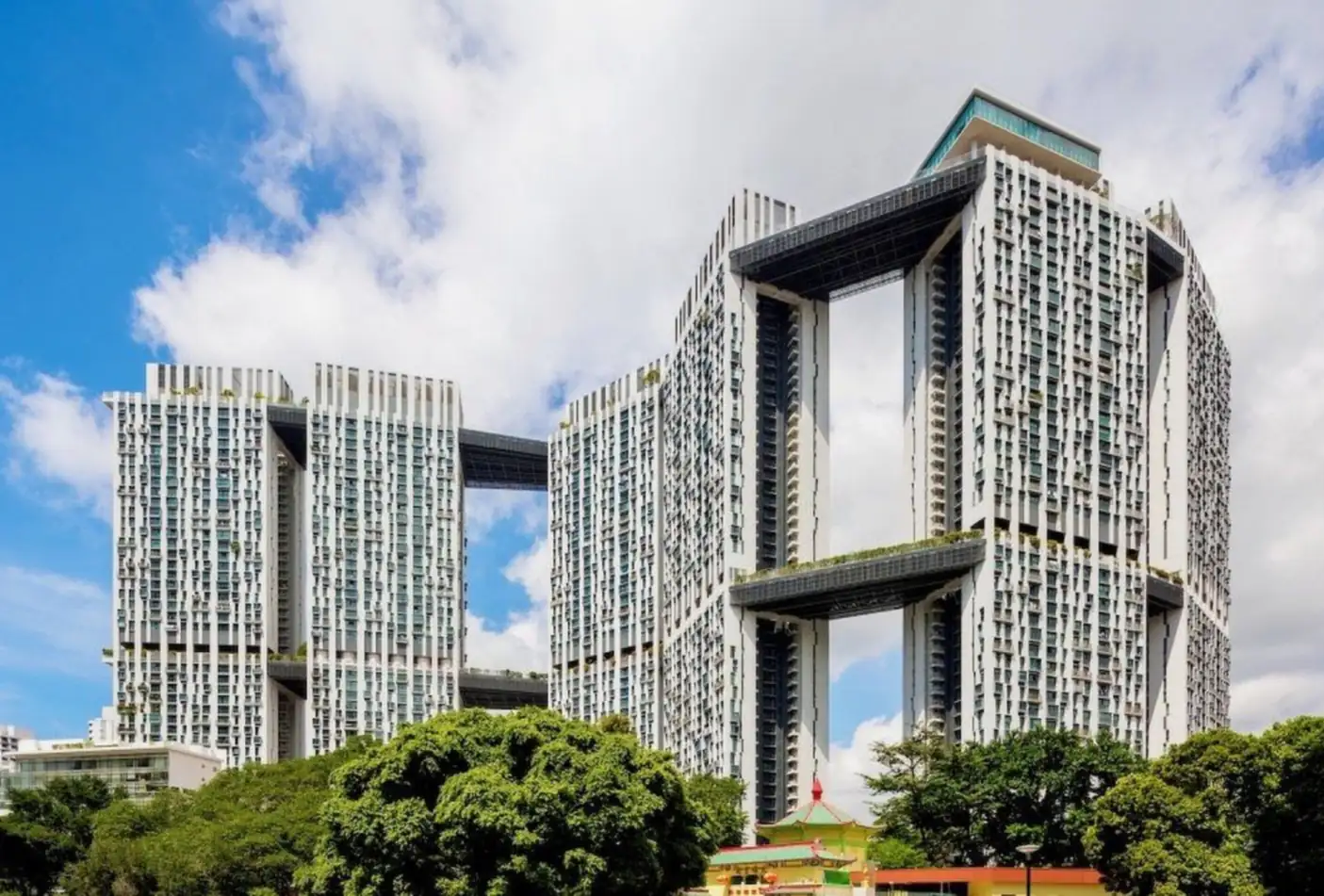
$1.72M at Pinnacle@Duxton: What September's HDB Resale Records Really Signal
A run of town and project records in one month. Read closely, they say more about location, lease and layout than about HDB prices as a whole.
Should Every Property Move Leave You Wealthier? The Honest Version
Treating your moves as a sequence rather than a series of one-offs is genuinely better thinking. It also breaks in two places, and both of them are expensive.
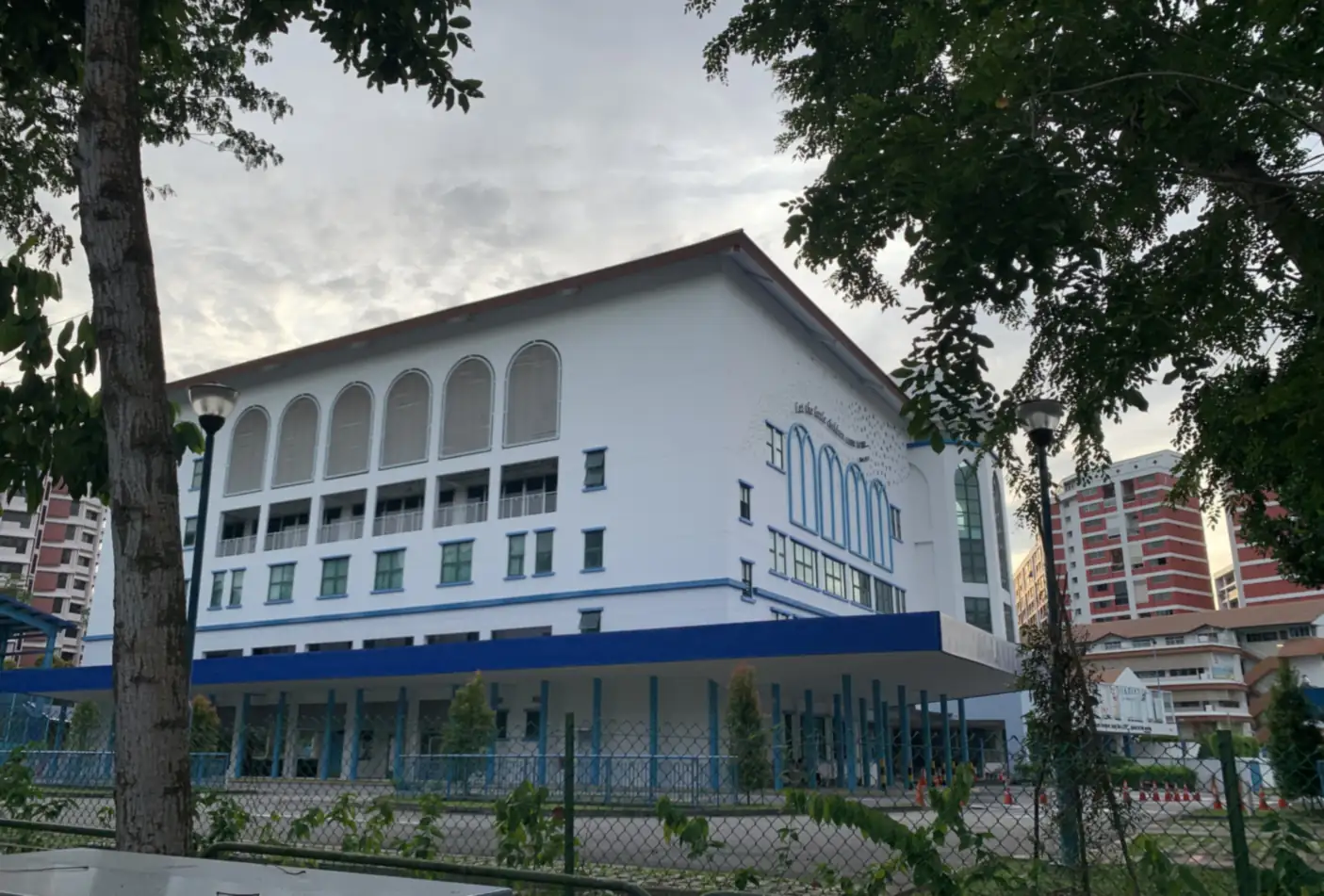
New P1 Rules Widen 12 School Catchments. What Now for School-Zone Homes?
At 12 schools, living as close as possible will no longer carry the same Phase 2C advantage. That changes what a school-zone premium pays for, not what makes a home worth living in.