Singapore's New Defect Rules: What They Change for New-Launch Buyers
The headline is the enforcement. The quieter shift is what a developer's track record now means when your family is choosing.
The short read
From 22 May 2026, developers who deliver homes with serious safety issues or defects can be barred from bidding for government land and from selling homes for up to five years, under a joint URA, MND and BCA circular. The rules formalise something Singapore has only done case by case before, and they will not affect the majority of developers.
For families buying off-plan, the practical change is that developer track record is now an enforceable, checkable fact rather than word-of-mouth. Choose the builder before you choose the unit: the unit is for now, the builder is for the decade.
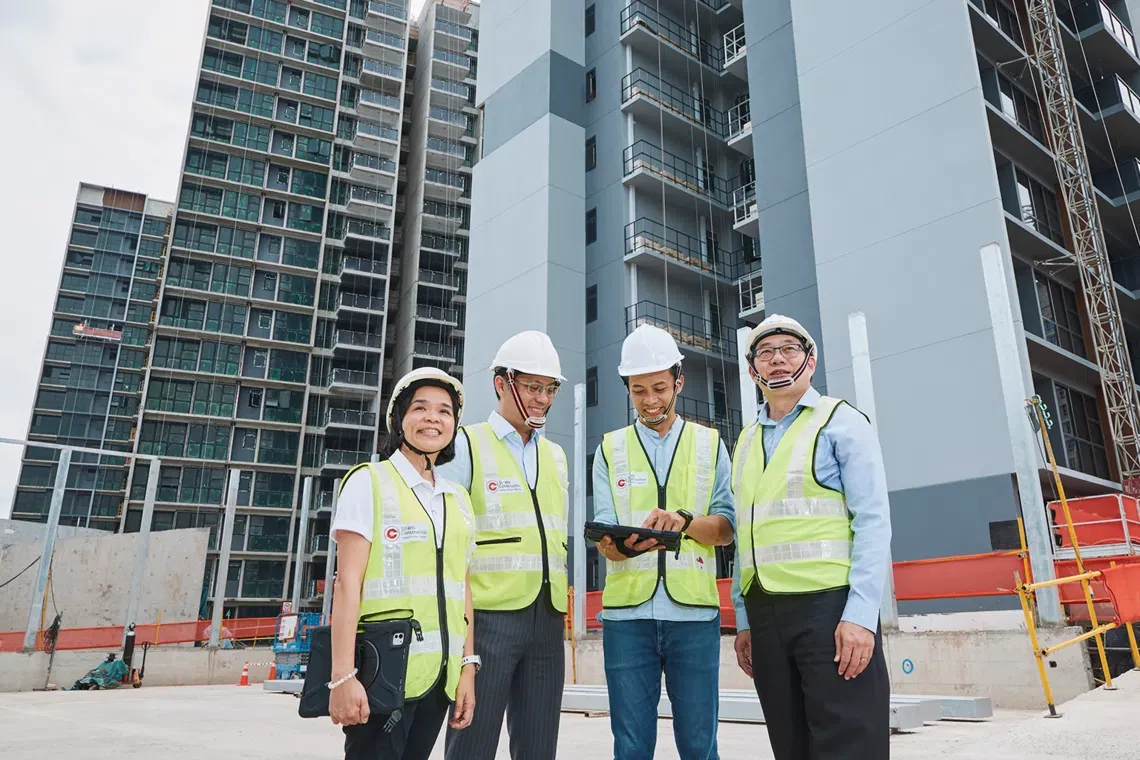
Singapore has put a price on building badly. From May 22, developers who deliver private homes with serious safety issues or defects can be barred from bidding for government land and from selling homes for up to five years, as The Straits Times reported. The rules arrived in a joint circular from the Urban Redevelopment Authority, the Ministry of National Development and the Building and Construction Authority.
The qualifying problems are not cosmetic. The authorities point to regulatory breaches that cause fire hazards or collapsing walls, and to defects like broken windowpanes and visibly cracked tiles. URA was careful to say the measures “will not affect the majority of developers”, and the developers’ association REDAS says none of its members have this kind of non-compliance on record.
So the headline reads like enforcement news, aimed at a small group of builders most families will never buy from. I think that undersells it. A family asked me last month how to tell a good developer from a great one. This week, the answer got a little easier, and the reason is worth understanding properly before your next launch weekend.
What exactly changed on May 22?
Two penalties, both aimed at the future rather than the past.
The first is a no-sale licence condition. An errant developer can still buy a private site and start construction on its next project, but it cannot sell those homes. In a business that runs on progressive payments from off-plan buyers, that is close to switching off the revenue model. The developer must build first and find its buyers later, carrying the financing cost the whole way.
The second is disqualification from Government Land Sales for sites with residential components, and the definition is drawn widely: residential, residential with commercial at first storey, commercial, commercial and residential, hotel, and white sites. Errant developers can still buy land privately, through en-bloc sales for instance, but the state land pipeline that feeds most major launches is closed to them.
Two design details tell you the regulators thought about how developers actually behave. Penalties can extend to a firm’s directors and others with influence over its business decisions, so the classic move of retiring one project company and incorporating a fresh one does not wash the record clean. And there are procedural safeguards on the other side: early warnings, the chance to make representations, and time to rectify before any penalty lands. This is not a regime for punishing an honest builder over a snag list. It is aimed at the developer who treats rectification as someone else’s problem.
Why do defects show up years after you collect the keys?
Here is the part the news cycle never has room for. When you buy off-plan, you are buying a promise. The showflat is a promise, the brochure is a promise, and the building itself will not exist for three or four years. Even when you collect your keys, you still do not know what you bought, because a building reveals its construction quality on its own schedule.
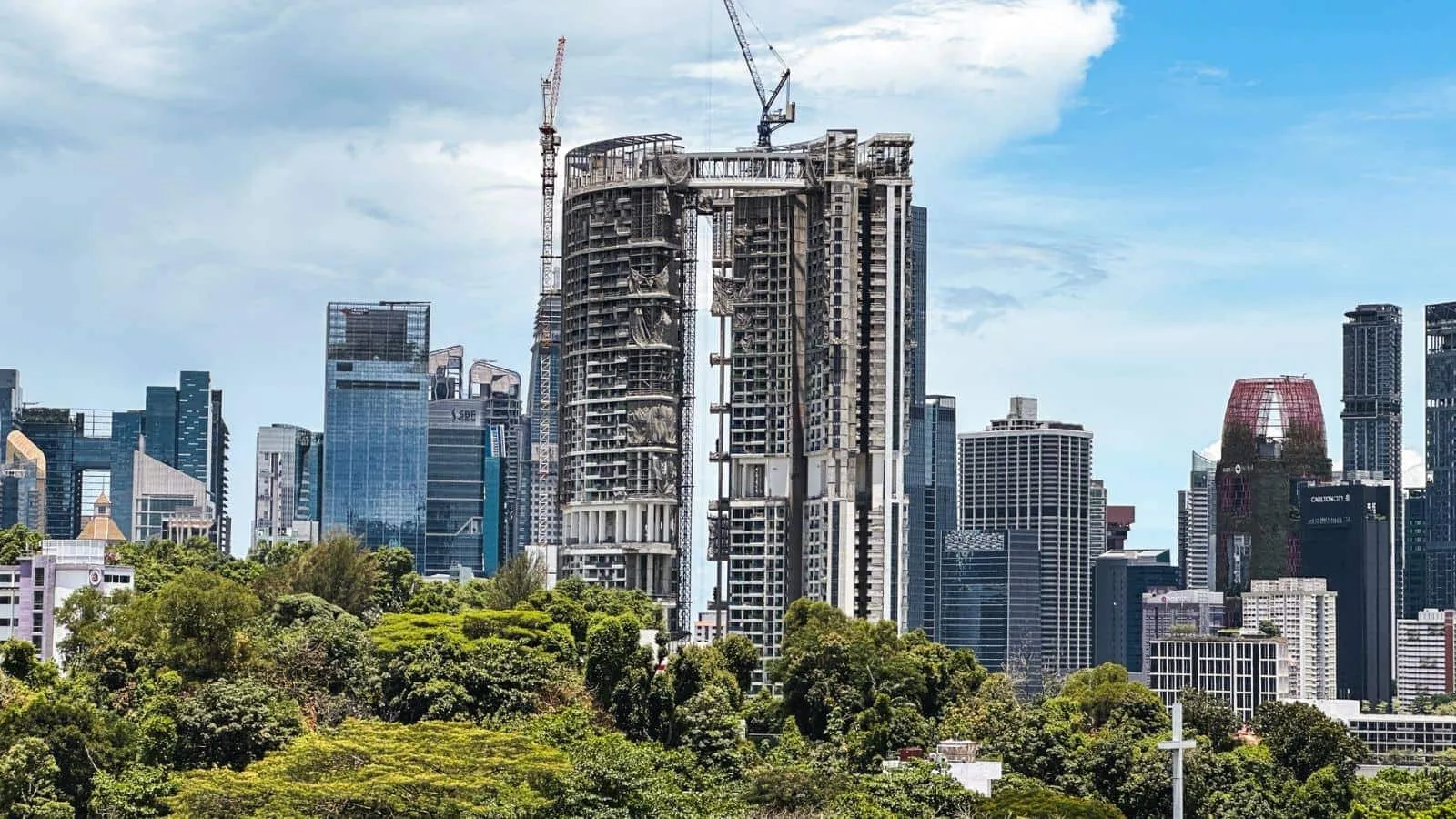
Waterproofing looks fine until the second monsoon season finds the shortcut. Hairline cracks in tiling take a few cycles of thermal movement to open up. Facade sealant, mechanical and electrical work, lift systems: the honest test of workmanship is not the handover inspection, it is year four and year seven. By then, the developer has collected its money, the sales team has moved to the next launch, and the family is left negotiating rectification with whoever still answers the phone.
That timing mismatch is precisely why this regime matters. Until now, a developer’s quality record lived in word-of-mouth and long memory: owners’ forums, contractors’ gossip, agents who had seen a project age badly. Useful, but unenforceable, and invisible to a first-time private buyer. Now part of that record is a regulatory fact with a five-year commercial consequence attached.
The most expensive defects are the ones that surface after the sales gallery has been torn down.
Professor Sing Tien Foo of NUS Business School made a point in the ST report that deserves more attention than it got: it is hard to fully eliminate errant developers because new and inexperienced players keep entering the market, some of them short-term operators chasing quick profits in a heated market. That is exactly the profile a family should be most careful of, and exactly the profile these rules are built to catch.
Has Singapore done this before?
Yes, case by case. The new circular formalises tools the authorities have already reached for twice.
| Year | Developer | Project | Action |
|---|---|---|---|
| Jan 2019 | Kingsford Huray Development | Normanton Park (1,862 units) | Sales ban after workmanship complaints at its other projects, including Kingsford Waterbay; lifted 30 Nov 2020 |
| 2022 | MCC Land (TMK) | Sceneca Residence, Tanah Merah (268 units) | No-sale licence condition; could build but not sell off-plan without Controller of Housing approval |
The Kingsford case is the instructive one. The ban on Normanton Park was not lifted until Kingsford Waterbay, a different project entirely, was completed with its certificate of statutory completion and titles issued. The regulator’s logic was simple: prove you can finish one building properly before you sell another. The Sceneca site, for the record, was awarded through GLS in November 2020 at $248.99 million, which gives you a sense of the sums at stake when a developer’s access to land and sales is interrupted.
What was ad hoc is now standing policy, with published assessment factors: the number and severity of breaches relative to the project’s scale, time taken to rectify, impact on buyers, whether safety and liveability were affected. Developers now know the rules of the game in advance. So, usefully, do buyers.
How should a family actually read a developer’s track record?
Not from the brochure, and not from the launch-day crowd. Across seventeen years I have watched the 2am question stay remarkably constant. It is never really which launch is hot. It is who is building the home we will still be glad about in seven years. Here is how I would answer it now.
Walk their completed work, and pick the older projects. Any developer looks good at TOP. Visit something they finished five or ten years ago and look at the lobbies, the facade, the common-area finishes. Buildings do not lie about their builders.
Ask how the defect period went, not whether there were defects. Every project has a snag list; that is what the defects liability period is for. The signal is in the response. A defect list is not a scandal. A defect list that took two years and a lawyer’s letter to close is.
Check the regulatory record. This is the new tool. A no-sale condition or a GLS disqualification is now a public, enforceable marker. So is its absence, for whatever that is worth: silence proves less than a long record of clean completions does.
Weigh experience against the timeline of the promise. A four-year construction commitment from a developer with two decades of finished Singapore projects is a different instrument from the same commitment made by a newly formed vehicle on its first residential site. Both can deliver. Only one has shown you it can.
Choose the builder before you choose the unit; the unit is for now, the builder is for the decade.
Will the rules tighten supply at the margin, or hand established names a small structural advantage at GLS tenders? Possibly. Those are watch points, not forecasts, and the data will take quarters to read. I would rather wait than guess.
What this means if you are buying for two generations
Most of the families I work with are on their second or third private property, buying a home that has to serve parents on one floor and children on another, over a horizon measured in decades rather than launch cycles. For that kind of buyer, this regime changes the order of operations.
The unit mix, the stack, the facing, the price per square foot: all of that still matters, and all of it is still what launch weekend is designed to make you think about. But every one of those decisions sits on top of a more basic bet, which is that the entity collecting your progressive payments will still be standing behind its workmanship when the building starts telling the truth in year five. The new rules do not remove that bet. They make it legible, and they give the developer a five-year reason to take it as seriously as you do.
And there is a second-order effect worth holding onto: your future buyer inherits the same question. When you sell in ten or fifteen years, the person on the other side of the table will be reading the building’s condition and, increasingly, the developer’s record behind it. A well-built project from a clean-record developer is not just a safer home. It is a cleaner exit.
What I would tell my own children, if they asked me today: the showflat is selling you the unit. Make sure you have already chosen the builder.
The numbers
| Rules take effect | 22 May 2026 |
| Issued by | URA, MND and BCA (joint circular) |
| Maximum penalty period | Up to 5 years |
| Penalties | GLS disqualification; no-sale licence condition on future projects |
| Still permitted | Private land purchases (e.g. en-bloc sales) |
| Precedent (2019) | Kingsford Huray sales ban on 1,862-unit Normanton Park |
| Precedent (2022) | No-sale condition on Sceneca Residence (MCC Land TMK) |
| Sceneca site awarded | Nov 2020, $248.99 million (GLS) |
Questions families ask
What are Singapore's new rules for developers with defective projects?
From 22 May 2026, URA, MND and BCA can bar developers who deliver homes with serious safety issues or defects from bidding for government land and from selling homes for up to five years. The penalties can also reach a firm's directors and people with influence over its business decisions, so an errant developer cannot simply reincorporate under a new name and carry on.
How do I check a developer's track record before buying a new launch?
Walk their last two or three completed projects, ideally ones past the five-year mark, and look at how the buildings have aged rather than how they launched. Ask owners in those projects how the defect period was handled and how long rectification took. From now on, also check whether the developer has ever been issued a no-sale condition or GLS disqualification, because that history is a regulatory record, not a rumour.
What counts as a serious defect under the new rules?
The authorities cite regulatory breaches that cause fire hazards or collapsing walls, and defects such as broken windowpanes and visibly cracked tiles. Assessment weighs the number and severity of breaches relative to the project's scale, how long the developer took to rectify them, and whether safety or liveability was affected. Cosmetic snags handled promptly are not what this regime is aimed at.
Do the new rules protect me if I have already bought a unit with defects?
Not directly. Your existing remedies, such as the defects liability period under your sale and purchase agreement, are unchanged. What the rules add is deterrence: a developer now has a five-year commercial reason to rectify quickly and properly, because a poor rectification record can cost them land access and sales licences on future projects.
Will the new defect rules push up new-launch prices?
It is too early to say. If some developers are sidelined from government land sales, supply at the margin could tighten, and established names may carry a small structural advantage that shows up in pricing. But those are watch points, not forecasts. The regulators themselves say most developers already comply, and the data will take quarters to read clearly.
Reporting referenced: The Straits Times. Analysis and views are Adrian Lim's own.
Talking it through beats reading about it.
If this story touches a decision your family is weighing, send Adrian a message. A first conversation costs nothing and commits you to nothing.
WhatsApp Adrian · +65 8183 2333More from Insights

One Marina Gardens at $3,290 psf: What a Record High Really Signals
A new print at the top of District 1 is real news. It is also, for most Singapore families, scenery — and knowing the difference is worth more than the headline.
The S$880,000 landed home: what the price is actually telling you
The number is real. The number is also the easy part of the story.
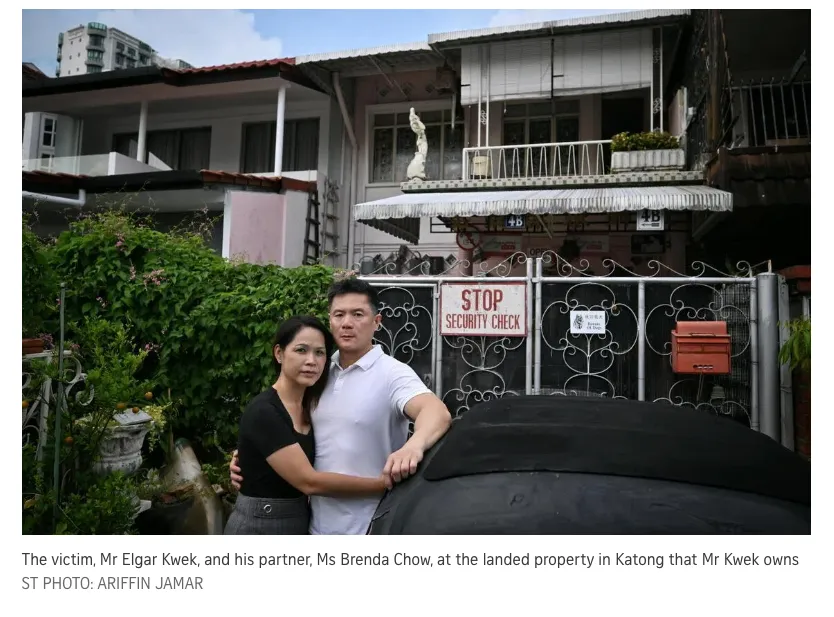
A Forged NRIC Nearly Cost a Katong Family S$2.9 Million. Here's the Real Lesson
The headline reads as a banking failure. For families sitting on a fully paid landed home, it reads as something closer to home — a question about who is watching your title.